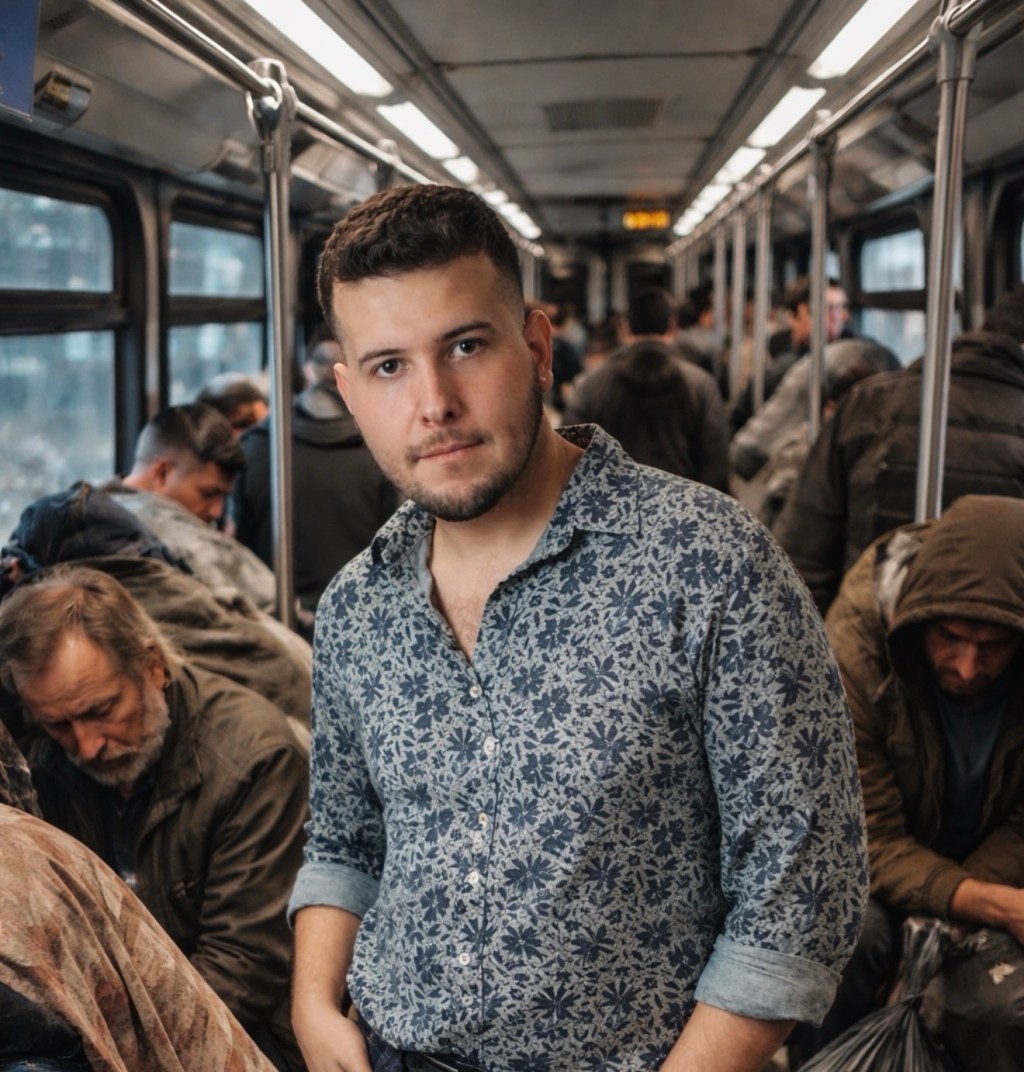
Something I can no longer silently accept is homelessness.
I believe shelter is a human right. In a country as wealthy as the United States, we are long overdue in guaranteeing a basic level of housing that meets people’s needs. No one should be forced to live on a sidewalk, on a bus, or in a public library just to survive.
Not all unhoused people are mentally ill. Some are working individuals going through financial hardship. Some are families priced out of rent. Some struggle with addiction. Some live in their cars while holding jobs. The causes of homelessness are complex — rising housing costs, untreated mental illness, substance use disorders, economic instability — but the moral conclusion is simple: human beings should not be living in dehumanizing conditions.
Since moving to Los Angeles in 2013, I have relied on public transportation. I’ve encountered thousands of unhoused individuals. It has never felt normal to see people sleeping on sidewalks, deteriorating in public, or using buses as makeshift shelters because they have nowhere else to go.Public spaces are being stretched beyond their purpose. When buses become rolling shelters without bathrooms, sanitation, or services, it fails everyone — transit riders and unhoused individuals alike. The answer is not to shame people for surviving. The answer is to create real, functional alternatives so that public transit is transportation, not emergency housing.
There are also legitimate public safety and public health concerns. Violent incidents, though not representative of most unhoused people, do occur. The murder of Brianna Kupfer in Los Angeles was a tragedy that shocked the city. In 2024, a woman in Santa Monica was assaulted in her own home by an unhoused man who entered through a window. These cases are horrific — and rare — but they expose a deeper failure: we do not have a functioning system to intervene when people are severely mentally ill and deteriorating in public.
Compassion cannot mean neglect.
Allowing people in the midst of psychosis or severe addiction to remain untreated on the streets is not progressive — it is abandonment. We need a comprehensive mental health system that includes crisis intervention, inpatient treatment when necessary, and long-term supportive housing. Some individuals will require mandated treatment when they are a danger to themselves or others. Ignoring that reality helps no one.
At the same time, we must distinguish between different groups within the unhoused population:
Working people living in cars need safe parking programs, sanitation access, and short-term rental assistance. Families need emergency housing and rapid rehousing support. Individuals struggling with addiction need treatment and recovery services. Those with severe mental illness need structured, supervised care.
A one-size-fits-all approach has clearly failed.
We should invest in:
Subsidized cooperative housing models.
Expanded mental health facilities.
Safe parking sites with restrooms and case management.
Transitional housing with job placement support.
Long-term supportive housing for the chronically homeless.
Other countries use aggressive rehabilitation models for severe addiction. While controversial, they are built around the idea that sometimes “tough love” and structured intervention can prevent deeper self-destruction. The U.S. must at least be willing to have an honest conversation about where autonomy ends and public safety begins.
What we cannot continue doing is pretending that leaving people outside is compassion.
We are one of the wealthiest nations in the world. If we can fund massive bureaucracies and detention systems, we can fund housing infrastructure and mental health treatment. The issue is not resources; it is political will and moral clarity.
Homelessness should not be normalized. It should not be defended as a lifestyle choice when it clearly involves suffering, illness, and systemic failure. And it should not be weaponized for political outrage without serious policy proposals behind it.
We can demand better.
Every person deserves a dignified place to sleep — not a sidewalk, not a bus seat, not a park bench.
Shelter is not radical. It is the bare minimum of a functioning society.
What we call compassion today too often mistakes non-interference for moral virtue. We have elevated autonomy into an untouchable principle, hesitating to intervene even when someone is visibly unraveling in public — gripped by untreated psychosis, severe addiction, or cognitive collapse. But autonomy presumes capacity. When the mind is fractured by illness or dependency, the freedom we claim to respect may no longer be fully intact. To stand back in the name of “respect” while a person deteriorates on a sidewalk is not neutrality; it is withdrawal disguised as empathy. A society unwilling to distinguish between self-determination and self-destruction risks abandoning its most vulnerable members under the banner of tolerance. Compassion is not simply the refusal to coerce. It is the willingness to accept responsibility when a fellow human being can no longer reliably protect their own dignity or safety.
Recognizing the limits of autonomy, however, does not require hostility toward those who are unhoused. Freedom in a shared society is reciprocal. The right to occupy public space cannot include the right to undermine the health, safety, and order that make shared space possible. When open drug markets operate on sidewalks, when public sanitation collapses because no facilities exist, or when parks and transit systems become de facto encampments, the failure is systemic — but the consequences are tangible. Ignoring this reality is not compassion; it erodes the civic standards that safeguard everyone, including the unhoused themselves. A humane society must first build sufficient shelter, treatment, and sanitation infrastructure — and then uphold reasonable boundaries in public spaces. Order without support is cruelty. Support without order is abandonment. A functioning city requires both.
By Jonathan Marquez
Make a one-time donation
Make a monthly donation
Make a yearly donation
Choose an amount
Or enter a custom amount
Your contribution is appreciated.
Your contribution is appreciated.
Your contribution is appreciated.
 Truth Crave
Leave a comment