By Jonathan Marquez
CHICAGO, Illinois — A growing rat problem in Chicago’s Lincoln Park neighborhood is raising serious questions about accountability, public safety, and whether extreme wealth can allow someone to continue behavior that harms an entire community.
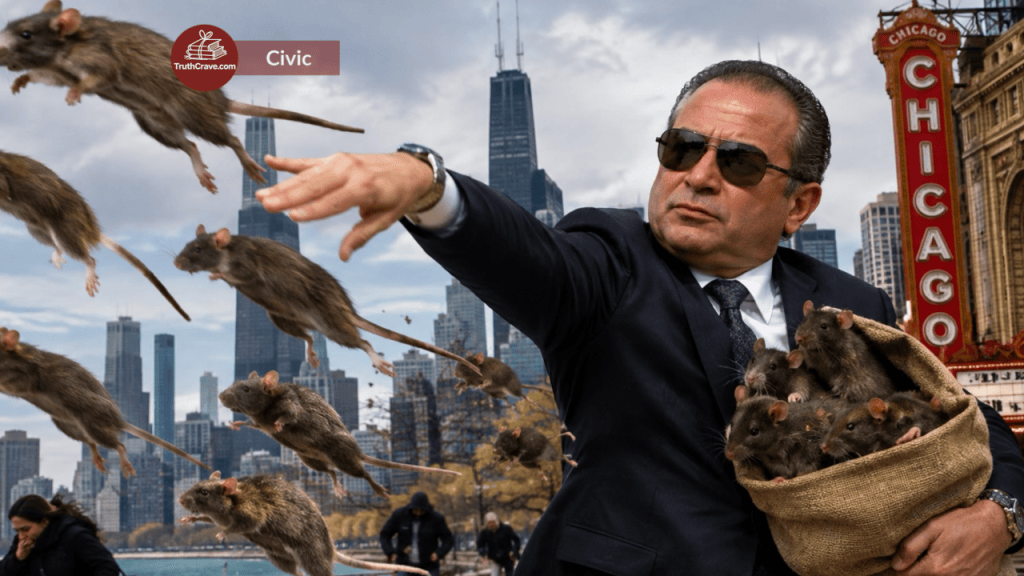
According to reports, billionaire Barre Seid has come under scrutiny over allegations that people working for him have repeatedly scattered nuts, seeds, and other food around his property and nearby Lincoln Park. City officials have raised concerns that the feeding attracts wildlife and contributes to the neighborhood’s rat problem.
The reported situation raises a troubling question: What happens when conduct that allegedly harms a community continues despite warnings, citations, and intervention by local authorities?
When the public pays the price
Rat infestations are not simply an inconvenience. They can threaten public health, damage property, disrupt local businesses, and make residents feel unsafe in their own neighborhoods.
For homeowners, tenants, and small-business owners, an ongoing infestation can mean additional expenses, damaged property, and declining confidence in the safety and livability of their surroundings.
When residents are forced to live with a persistent environmental hazard while authorities struggle to stop it, the consequences extend far beyond the person whose conduct is under scrutiny.
And when financial penalties appear insufficient to change that behavior, the public has every reason to question whether enforcement is working equally for everyone.
Is this community terror?
Yes—if terrorism is understood in its broader civic sense: the deliberate or reckless use of fear, danger, and disruption to pressure an entire community. Allegedly sustaining a rat infestation despite repeated warnings and citations can terrorize residents by threatening public health, damaging property, disrupting daily life, and making people feel unsafe in their own neighborhood.
This is not merely a dispute between one property owner and city inspectors. When conduct allegedly creates a persistent hazard for surrounding residents, continues after authorities intervene, and imposes costs on the public, it can function as community terrorism—especially when wealth appears to blunt the consequences.
The legal classification of terrorism may depend on intent and statutory definitions, and no court has established that Seid intended to terrorize anyone. But the impact on residents still matters. A community should not have to endure fear, contamination risks, property damage, or the loss of access to public spaces while an affluent individual treats fines as an acceptable cost of continuing the behavior.
Residents should not have to choose between tolerating a preventable neighborhood hazard and abandoning the place they call home. Public spaces must be protected, health concerns must be addressed, and enforcement must apply regardless of wealth.
Could a neighborhood’s decline benefit someone?
The circumstances also raise a broader question about housing security and the vulnerability of communities to environmental deterioration.
When a neighborhood becomes less desirable, residents may face declining property values, higher maintenance expenses, and pressure to relocate. Businesses can lose customers, and families who lack the financial resources to move may find themselves trapped in deteriorating conditions.
These consequences can disproportionately harm people who have invested their savings, time, and livelihoods in a neighborhood.
It is therefore reasonable to ask whether anyone could benefit financially from making an area less desirable. But asking that question is not the same as proving that someone is pursuing such a strategy.
At this time, there is no verified evidence establishing that Barre Seid or his wife deliberately worsened the rat problem to lower property values or force residents from their homes. That alleged motive requires independent investigation and supporting evidence.
The public deserves answers about what happened, why the behavior allegedly continued, and whether anyone benefited from the resulting conditions.
Wealth must not become immunity
The central issue is accountability. If ordinary residents can face penalties for violating public-health rules, wealthy property owners should not be able to treat enforcement as an expense that comes with doing business.
A system that cannot effectively address persistent hazards because the person responsible can afford the consequences risks undermining public trust. Citations alone mean little if the underlying problem continues and residents are left to absorb the damage.
Chicago officials must establish the facts, enforce applicable laws, protect public spaces, and ensure that residents are not left carrying the financial and health burdens of a preventable crisis.
If the allegations are substantiated, the response should be proportionate to the harm and effective enough to stop the conduct.
A community deserves protection, not intimidation
No neighborhood should have to wonder whether its health, safety, and stability matter less than the preferences of a wealthy individual.
The alleged rat-feeding activity in Lincoln Park raises important questions about public health, the effectiveness of municipal enforcement, and the unequal power that wealth can create between individuals and the communities around them.
Calling attention to the potential effects of this conduct is not an argument for convicting anyone in the court of public opinion. It is an argument for investigating credible concerns, demanding transparency, and putting residents’ well-being first.
Truth Crave’s position is clear: No individual’s wealth should put a community’s health, safety, or stability at risk. Residents deserve answers, meaningful enforcement, and the assurance that their right to a safe and livable neighborhood will not be sacrificed to someone else’s choices.
When a community is left living with fear, disruption, and a persistent public-health hazard, the question is no longer simply about rats. It is about who has the power to impose costs on everyone else—and who is expected to live with the consequences.


Leave a Reply