
The Spanish film connects generations of gay men through love, historical persecution, and the fight to live authentically. For one gay viewer, its message feels especially urgent in an era of resurgent far-right politics.
By Jonathan Márquez | Truth Crave — Opinion
I volunteered with KCRW for an advance screening of La bola negra, and the experience began with a reminder of how much people wanted to see this film. The atmosphere was hectic as audiences gathered to get inside, and I was grateful for the opportunity to attend. What I did not expect was to leave the theater feeling so deeply moved—and more determined than ever to defend the freedoms that allow people like me to live openly.
As a gay man, I genuinely loved this film. But La bola negra, directed by Javier Calvo and Javier Ambrossi, is much more than a love story. It is a powerful meditation on queer identity, historical memory, inherited trauma, and the consequences of allowing hatred to become institutionalized. It reminds us that the freedoms many of us enjoy today were not handed to us. They were fought for, often at an extraordinary human cost.
And at a moment when far-right movements are gaining political influence in the United States and across Europe, this story feels painfully relevant.
Three lives, one history
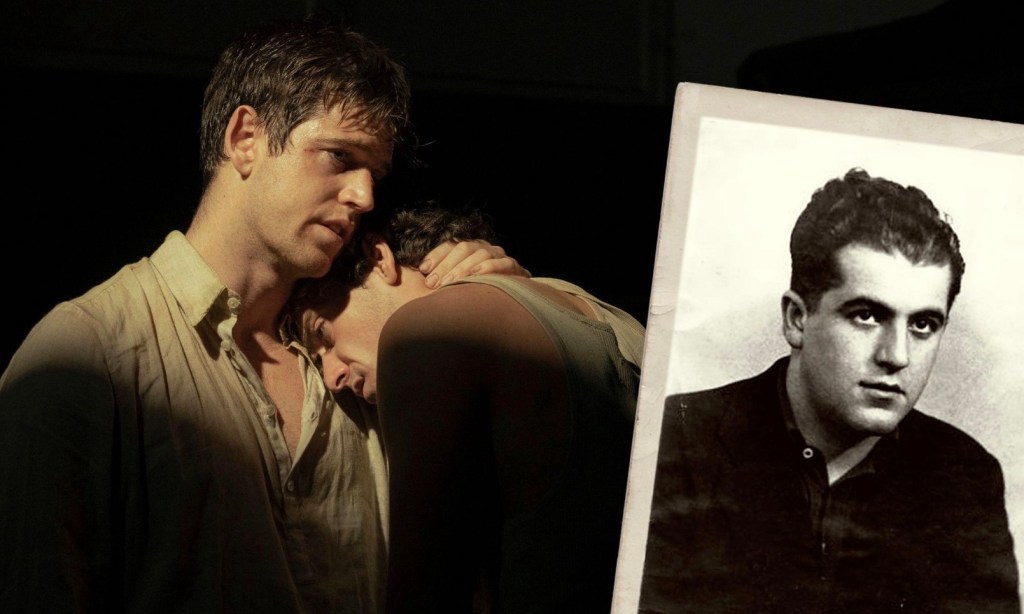
La bola negra unfolds across three timelines: 1932, 1937, and 2017. Each follows a different man whose experiences eventually become part of a larger story about love, rejection, and the consequences of a society that refuses to accept people for who they are.
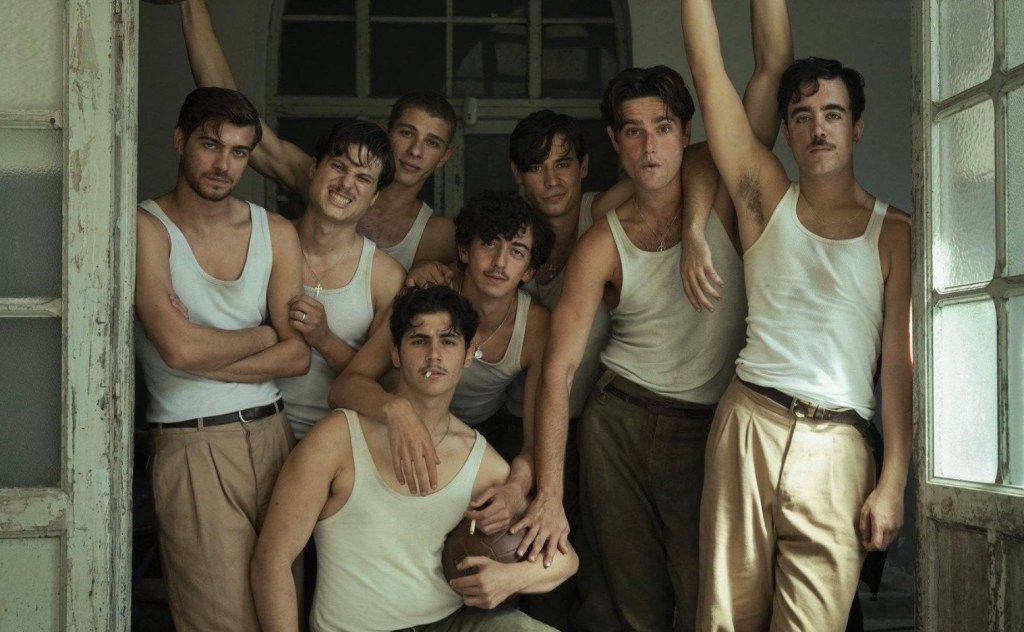
In 1932, Carlos, played by Milo Quifes, attempts to enter an exclusive, high-class casino in Granada. Instead, he is rejected after receiving a “black ball” vote, a symbol of exclusion fueled by rumors about his homosexuality. His experience captures the cruelty of a society in which a person’s sexuality can determine whether they are permitted to belong.
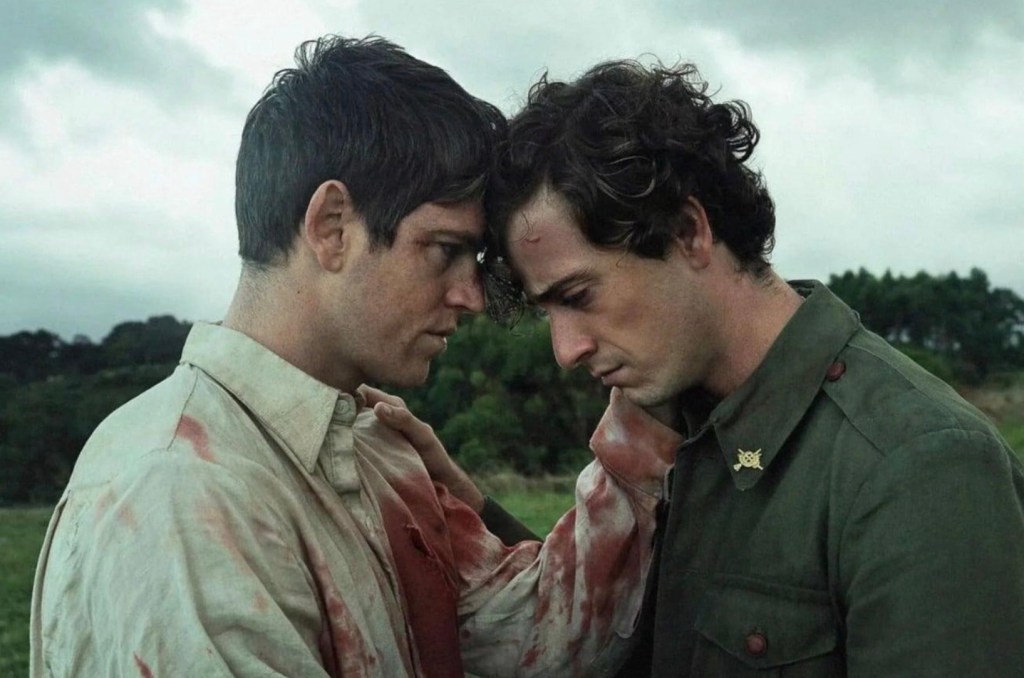
Five years later, during the Spanish Civil War, Sebastián, played by Guitarricadelafuente, is conscripted into the Nationalist army and assigned to guard Rafael, a wounded Republican prisoner played by Miguel Bernardeau. What begins as a relationship shaped by war and opposing sides develops into an unexpected emotional connection.
In 2017, Alberto, played by Carlos González, is a playwright turned historian who inherits a mysterious letter and manuscript from an estranged grandfather he never knew. His discovery leads him into the buried history of his family and reveals connections to the lives that came before him.
As these timelines gradually converge, the film becomes increasingly affecting. What initially appears to be three separate stories develops into a portrait of how love, suffering, and silence can travel across generations.
The brilliance lies in what these men share despite the decades separating them. Their circumstances are different, but the desire beneath their stories remains familiar: to be loved, to be recognized, and to live without having to conceal an essential part of themselves.
That desire should not be controversial. Yet history repeatedly demonstrates how dangerous it can become when powerful institutions decide that certain people do not deserve the same dignity as everyone else.
The past is not as distant as we would like to believe
Watching La bola negra in 2026, I could not help thinking about the political climate in which we are living.
Donald Trump, Elon Musk, and other prominent figures associated with the American right have become symbols, in different ways, of a political environment in which traditional hierarchies, cultural resentment, and attacks on marginalized communities play an increasingly visible role. The international influence of right-wing movements, including those promoted by figures such as Benjamin Netanyahu, also raises questions about the future of liberal democracy, minority rights, and the treatment of vulnerable populations.
These political figures and movements are not identical, and their policies should be judged individually. But the broader question is unavoidable: What happens when political power is used to restrict people’s freedom to live, love, express themselves, and participate equally in society?
La bola negra offers a disturbing historical answer.
Fascism does not merely demand political obedience. It seeks to impose a vision of society in which conformity is rewarded, difference is punished, and individual freedom becomes subordinate to the interests of those in power.
For queer people, the consequences of that vision are not abstract. They have included censorship, criminalization, public humiliation, imprisonment, and murder. The Spanish Civil War and the Franco dictatorship provide devastating historical examples of how political repression can destroy lives and attempt to erase entire communities from public memory.
The film brings those realities into an intimate frame. Rather than presenting history as a collection of dates and political battles, it shows us the people forced to live through it. It makes persecution personal.
That is what makes the film so effective. It asks us to consider not only what political extremism does to a country, but what it does to the person who is simply trying to love someone.
A beautiful middle finger to the far right
For me, La bola negra is a beautiful middle finger to fascism.
It refuses to allow queer people to remain footnotes in someone else’s history. It insists that our lives, relationships, desires, and suffering belong at the center of the historical record.
The film’s connection to Federico García Lorca makes this message even more powerful. The celebrated Spanish poet and playwright was murdered in 1936, during the opening months of the Spanish Civil War. His unfinished work, La bola negra, provides part of the inspiration for the film, which also draws on Alberto Conejero’s play La piedra oscura.
Lorca’s legacy represents a world of artistic expression and human complexity that authoritarianism seeks to control. His work continues to reach new generations, long after the forces that sought to silence him have passed into history.
That is the cruel irony of repression: those who attempt to erase people often ensure that their stories become even more important to the generations that follow.
The film’s exploration of inheritance gives that idea an emotional dimension. Alberto’s discovery of the past becomes more than a family mystery. It becomes an encounter with a history that was never fully explained to him, a reminder that the present is shaped by people whose lives and sacrifices may have gone unrecognized.
I found myself thinking about what the men who came before us might think if they could see the lives many queer people lead today.
Imagine someone who had to conceal his sexuality, who risked losing his family or his freedom simply by loving another man, seeing a generation that can walk down the street holding a partner’s hand, marry the person they love, build a family, or meet other gay men through dating apps without necessarily having to hide their identity.
Our present is not perfect. Discrimination remains real, and LGBTQ+ people continue to face hostility. But the progress is meaningful precisely because it was never guaranteed.
Those freedoms were made possible by generations of people who refused to accept that their lives were worth less than anyone else’s.
Queer freedom is part of democracy
One of the most important lessons I took from this film is that democracy cannot be measured exclusively by elections, economic growth, or the strength of political institutions. It must also be measured by the freedom ordinary people have to live without fear.
A democracy that permits citizens to vote but denies them equal dignity because of their sexuality, gender, religion, or identity is failing to fulfill its promise.
The same principle applies to women’s rights, freedom of expression, and the rights of other marginalized communities. Authoritarian social movements often depend on rigid expectations about how people should live. Women are pressured into prescribed domestic roles. Men are expected to embody narrow ideals of masculinity. Queer people are told that their relationships are unacceptable or that their identities should remain invisible.
Under such a worldview, people become instruments for maintaining somebody else’s preferred social order rather than individuals entitled to determine the course of their own lives.
And this is where I believe the far right misunderstands humanity.
People want to love. They want to create art, build relationships, raise families, explore their identities, and experience the world. They want the freedom to make decisions about their own lives without having to answer to an authoritarian authority that regards their existence as a threat.
No amount of political money, corporate influence, or social media power can permanently eliminate those desires.
Figures with enormous resources can influence elections, shape public discourse, and help political movements gain ground. But political influence is not the same as winning the hearts and minds of an entire population. Nor does electoral success automatically translate into lasting cultural legitimacy.
The struggle for equality is not over simply because progress has been made. But neither should we assume that the resurgence of reactionary politics means that progress has been permanently reversed.
History is not a straight line toward freedom. It is a continuing struggle over who gets to enjoy it.
We must remember what it cost to get here
As I watched La bola negra, I thought about the freedoms I sometimes take for granted.
I can live as an openly gay man. I can express my identity, pursue relationships, and imagine a future in which I do not have to apologize for who I am. I can participate in a society where same-sex marriage is legally recognized and where queer people have fought to make their presence visible in public life.
Those realities did not emerge out of nowhere. They came through decades of organizing, protest, artistic expression, political advocacy, and personal courage. They came through the work of people who challenged laws and institutions that treated LGBTQ+ people as less deserving of protection and respect.
They also came through the sacrifices of people whose names we may never learn.
That is why queer representation in historical storytelling matters. When LGBTQ+ people are erased from history, it becomes easier to suggest that our existence is a modern trend, a political invention, or a threat to tradition. The historical record tells a different story: same-sex desire and diverse expressions of gender have existed across cultures and throughout recorded history, even when societies have refused to acknowledge them.
Transgender people, too, have histories that predate today’s political debates. Their existence is not negated by contemporary attempts to restrict their rights or redefine their identities out of public life.
La bola negra centers the experiences of gay men, but its larger insistence on the dignity of people who have been marginalized resonates far beyond one community.
We cannot build a future in which everyone is free by deciding that some people’s suffering is less important than others’.
A film that leaves you wanting to fight
I walked out of the screening not only moved by the romance at the heart of La bola negra, but also more politically energized. If anything, the film made me more committed to antifascism and to defending the rights that allow people to live authentically.
I do not mean that a movie can solve the political problems confronting us. It cannot. Nor does opposing fascism require us to pretend that every political disagreement is fascist or that every person on the right holds identical beliefs.
But art can remind us why these struggles matter. It can make historical suffering impossible to ignore. It can restore humanity to people who have been reduced to stereotypes, condemned by institutions, or forgotten by their descendants.
And sometimes, art can give us the emotional clarity to recognize what is at stake in the present.
The film also makes a compelling case for experiencing cinema as cinema. Its 35mm presentation offers a beautiful visual texture, and I found myself admiring the cinematography throughout. There is a richness to the images that complements the story’s emotional weight. The film invites you to sit with its characters, absorb its atmosphere, and allow its separate timelines to come together.
I understand why audiences at the advance screening were so eager to get inside. This is the kind of film that rewards the theatrical experience, where its visual beauty and emotional intensity can be experienced collectively.
Ultimately, La bola negra left me with a feeling that is difficult to describe but important to hold on to: gratitude for the people who came before us, anger at the forces that tried to silence them, and hope that the freedoms they helped make possible will survive.
I want the generations who come after us to inherit a world in which they do not have to fight the same battles over and over again. I want queer children to grow up knowing that their existence is not a mistake. I want women to have the freedom to determine their own futures. I want artists to create without fear of political retaliation, and I want democracy to mean more than the ability to cast a ballot.
That future will not arrive simply because we believe in it. It requires people to defend it, especially when doing so becomes uncomfortable or unpopular.
So, yes, I left the theater feeling more antifascist than ever. I left wanting to fight harder for the freedom to be ourselves and for a democracy that protects that freedom for everyone.
Fuck the fascists of the past, and reject the attempts of the present to revive their most hateful ideas. Viva freedom of expression. Viva queer love. Viva democracy.
La bola negra is a reminder that even when authoritarianism appears powerful, it cannot erase the humanity of the people it targets. The people who came before us deserve to be remembered, the people living today deserve to be free, and the people who come after us deserve a better future.
The far right may attempt to turn back the clock. But our existence is not a concession they can revoke, and our freedom is not a gift they can take credit for giving us.
Our lives, our love, and our freedom are worth defending. And they will continue to be worth defending for as long as there are people determined to take them away.


Leave a Reply