
By Jonathan Marquez
The Trump administration can point to one number and declare victory: 4.2% unemployment.
But an economy cannot be judged by one number alone.
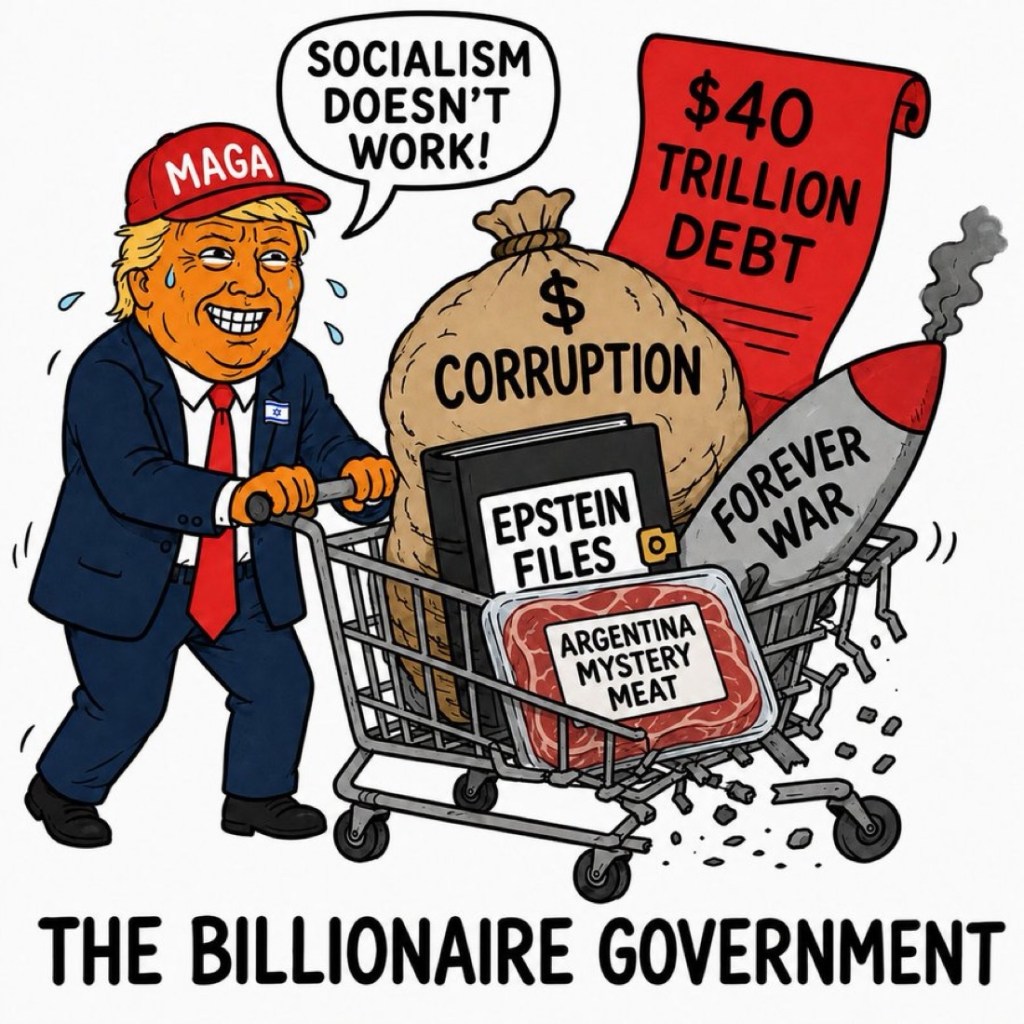
As the United States heads toward the 2026 midterm elections, the economic picture is considerably more complicated than the political messaging suggests. The September jobs report showed that employers added just 29,000 jobs, dramatically below economists’ expectations of roughly 90,000. The government also revised July and August employment downward by a combined 60,000 jobs. (Bureau of Labor Statistics)
That does not mean the American economy has collapsed. It means the labor market is losing momentum.
And that distinction matters.
The unemployment rate remains low by historical standards. But hiring has slowed, wage growth has cooled, and inflation continues to eat into workers’ purchasing power. Average hourly earnings rose 3% over the past year, while the latest available inflation reading before the September jobs report was 3.4%. CBS described the resulting situation bluntly: inflation has been wiping out wage gains, creating a real financial squeeze for households. (CBS News)
Then there is the number that received considerably less attention.

In August, CBS News reported that the Ludwig Institute for Shared Economic Prosperity estimated its “True Rate of Unemployment” at 24.9% for July. LISEP’s measure is intentionally broader than the government’s unemployment calculation: it includes people who are unemployed, involuntarily working part-time, and workers earning what it defines as poverty-level wages—less than $26,000 annually before taxes. (CBS News)
That 24.9% is not the official unemployment rate, and economists have criticized the methodology. The Bureau of Labor Statistics’ own broader U-6 measure—which includes unemployed people, marginally attached workers and people working part-time for economic reasons—was 7.6% in September. (CBS News)
But the existence of competing measures illustrates the larger problem with celebrating a single headline statistic: employment and economic security are not the same thing.
A person can technically be employed and still be struggling to pay rent.
A person can technically be employed while working fewer hours than they need.
A person can receive a paycheck and still be earning poverty-level wages.
Those people disappear from the political simplicity of a 4.2% unemployment headline.
This is where the Trump administration’s economic agenda deserves scrutiny.
Trump campaigned on an economic vision centered heavily on tariffs, deregulation and a revival of American manufacturing. Yet manufacturing employment has not produced the dramatic resurgence that rhetoric surrounding the policy promised. Reuters reported that manufacturing employment remained about 21,000 jobs below the level Trump inherited from the Biden administration in January 2025, despite some modest recent gains. (Reuters)
The September numbers tell a similar story of an economy that is moving, but hardly roaring. Manufacturing added roughly 9,000 jobs that month, while total payroll employment increased by only 29,000. (Bureau of Labor Statistics)
Meanwhile, consumers are still dealing with the consequences of elevated prices and expensive borrowing.
That is why the political argument over the economy cannot simply be reduced to whether 4.2% unemployment sounds good.
The more important question is:
What kind of jobs are being created, what do they pay, and can ordinary workers actually afford their lives with those wages?
That is the uncomfortable question for Trump’s radical right-wing economic agenda.
The administration can point toward low unemployment. Supporters can point toward economic growth and investment. Those are real parts of the picture.
But workers experience the economy differently.
They experience it at the grocery store.
They experience it when the rent comes due.
They experience it when a mortgage payment, car payment or credit-card balance gets more expensive.
They experience it when they apply for jobs and discover that companies are hiring cautiously.
And they experience it when their paycheck increases only to find that their purchasing power hasn’t meaningfully improved.
That is the central contradiction of Trump’s economic message: an economy can produce impressive headline numbers without producing an equally impressive improvement in everyday economic security.
The 2026 midterms will therefore present a much more complicated economic question than simply, “Is unemployment low?”
The question is whether the economic policies being sold as a revival are actually producing the kind of broad-based prosperity that workers were promised.
Because 4.2% unemployment is a statistic.
Economic security is an experience.
And for millions of Americans, those two things are still very far apart.


Leave a Reply