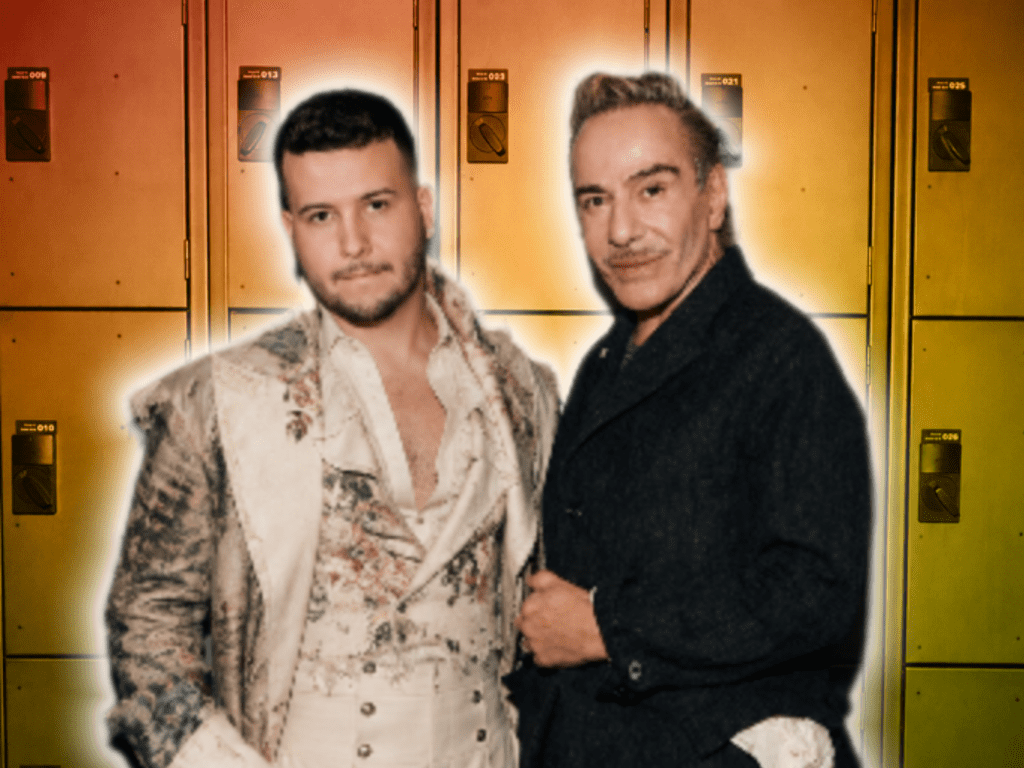
The Metropolitan Museum of Art and legendary fashion designer John Galliano have jointly canceled John Galliano: Horizons, the major Costume Institute exhibition that was set to anchor the 2027 Met Gala. The decision follows mounting backlash over Galliano’s history of antisemitic and racist remarks and raises complicated questions about redemption, accountability, and who gets to decide when a public figure has atoned.
By Jonathan Marquez and Duck.ai
The Metropolitan Museum of Art has abruptly canceled its planned 2027 Costume Institute exhibition honoring fashion designer John Galliano after weeks of escalating backlash over his history of antisemitic and racist remarks.
The exhibition, John Galliano: Horizons, had been scheduled to open in May 2027 alongside the annual Met Gala. Instead, the museum announced Monday that the exhibition would no longer move forward, with a replacement spring exhibition and new details about the 2027 Met Gala to be announced later.
The decision was presented as a joint one between Galliano and the museum.
“Following thoughtful discussions with John Galliano, we have together decided not to proceed with the exhibition,” Met Director and CEO Max Hollein said in an official statement.
Galliano, in a lengthy statement of his own, acknowledged the damage caused by his past behavior.
“I remain fully accountable for the pain caused by my words in the past, particularly the hurt I caused to the Jewish and Asian communities, and I remain deeply sorry for it.”
He added that “meaningful atonement is not achieved through an exhibition, institutional recognition or a single public gesture,” describing accountability as a continuing responsibility demonstrated through “listening, learning and one’s conduct over time.”
A Fashion Icon With a Troubled History
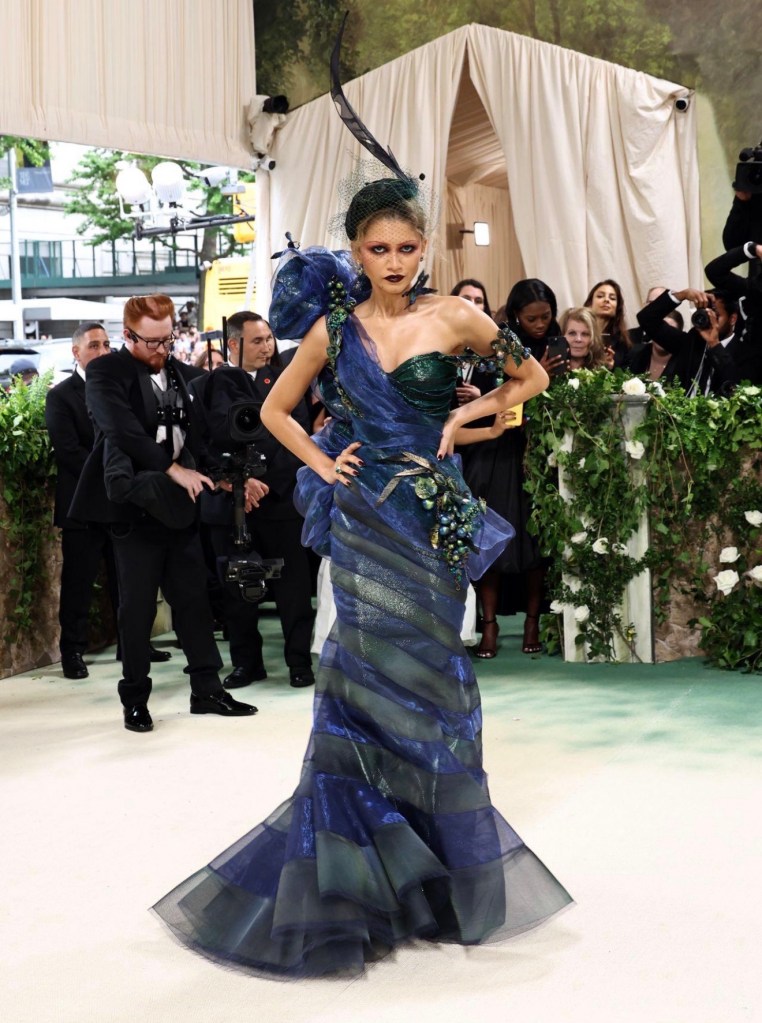
Zendaya in an avant-garde blue and green couture gown, featuring sheer layered fabrics, sculptural draping, and dramatic botanical embellishments.
Galliano is widely regarded as one of the most imaginative and influential fashion designers of his generation. His theatrical collections at Dior transformed the runway into performance art, while his later work at Maison Margiela earned widespread critical acclaim.
But his legacy has remained inseparable from a scandal that erupted in 2011.
Videos surfaced showing Galliano making antisemitic remarks during confrontations at a Paris bar, including praising Hitler. He was subsequently fired from Christian Dior and later found guilty by a French court of antisemitic behavior.
Galliano spent years away from the center of the fashion industry before returning in 2014 as artistic director of Maison Margiela, where he remained for approximately a decade.
For many in fashion, his career became a story of rehabilitation. He publicly apologized, sought treatment for addiction, and rebuilt a professional reputation through his work.
But the announcement that the Met would give him one of fashion’s most prestigious institutional honors reopened a fundamental question: Is professional rehabilitation the same thing as being worthy of celebration?
Why the Backlash Intensified
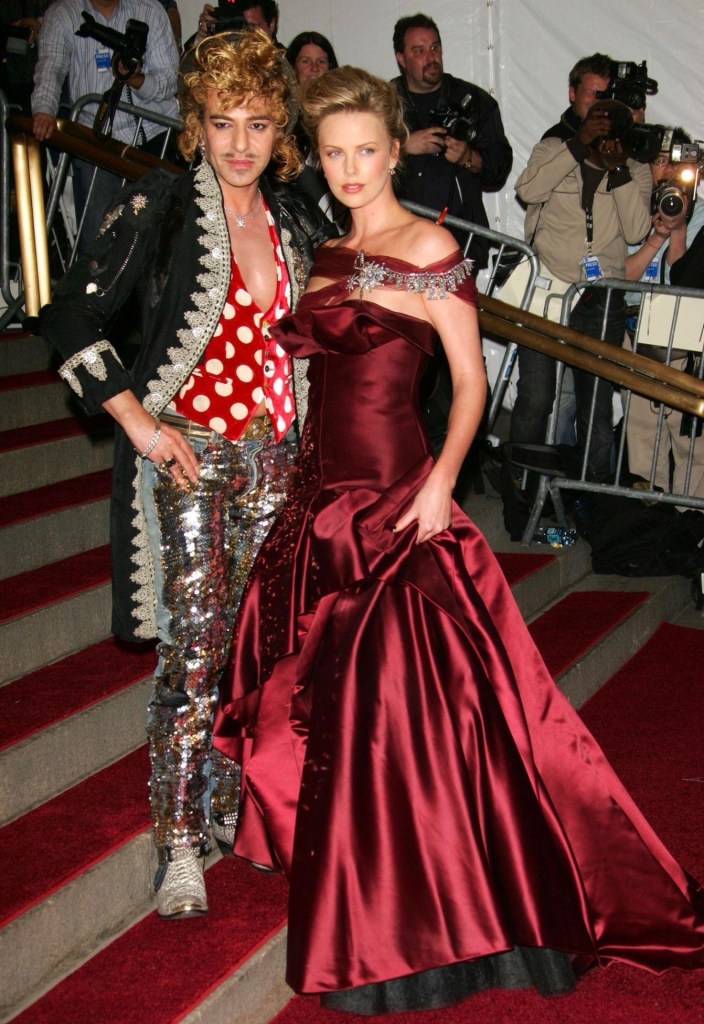
John Galliano poses alongside Kate Moss
The controversy wasn’t simply about whether Galliano should be allowed to work again.
The Costume Institute exhibition would have been particularly significant. Galliano was set to become only the third living designer to receive a solo retrospective from the Met’s Costume Institute, following Yves Saint Laurent and Rei Kawakubo.
The timing also intensified the controversy.
The 2027 Met Gala was expected to take place on May 3, which coincides with Yom HaShoah, Holocaust Remembrance Day. Given Galliano’s history of antisemitic remarks, critics argued that celebrating him at such a moment was particularly insensitive.
New York City Council Speaker Julie Menin, who is the daughter of a Holocaust survivor, became one of the most prominent critics of the exhibition.
After the cancellation was announced, Menin praised the decision, saying she had repeatedly expressed opposition to honoring Galliano and argued that the exhibition had caused significant pain within the Jewish community.
Jonathan Greenblatt, CEO of the Anti-Defamation League, also criticized the decision to honor Galliano, calling the planned exhibition “the wrong move at the wrong moment,” according to the Associated Press.
Galliano Says He Didn’t Want the Controversy to Consume the Met
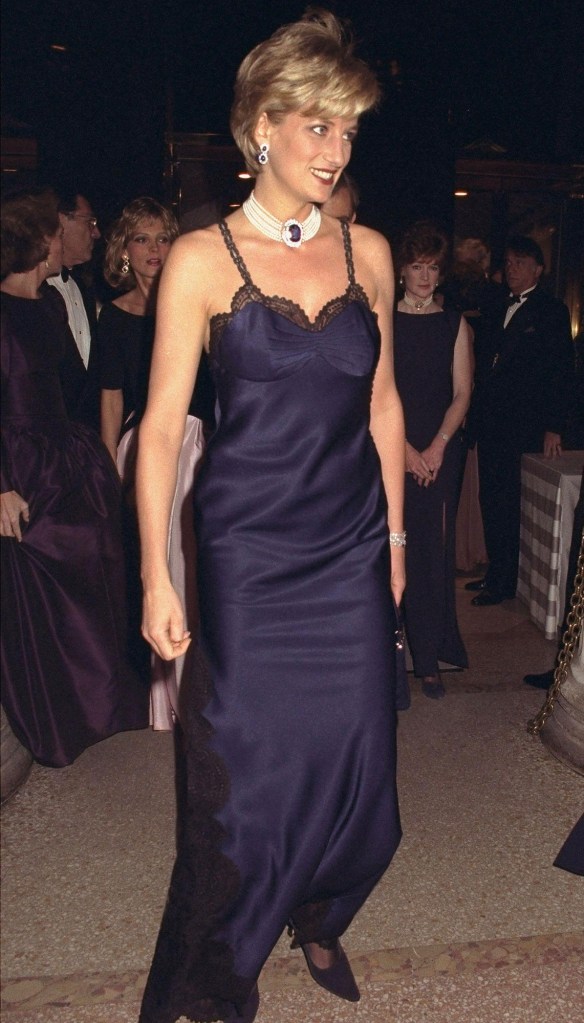
Princess Diana wearing an elegant John Galliano-designed gown.
In his statement, Galliano appeared to acknowledge that regardless of his personal journey over the last fifteen years, the exhibition itself had become bigger than his work.
“I do not want the debate surrounding me to place The Met in a difficult position or to distract from the remarkable work of the Costume Institute,” Galliano said.
He also acknowledged something crucial to the entire debate: that an exhibition honoring his work could be painful for people affected by his past actions.
Anna Wintour, a Met trustee and one of fashion’s most powerful figures, supported the decision.
“John’s decision that the exhibition devoted to his work should not take place at this time is very courageous and a measure of the man he is,” Wintour said. “I believe this is the right decision.”
Costume Institute curator Andrew Bolton similarly said museums have a responsibility to examine difficult histories with “rigor, candor, and care,” while acknowledging the pain and concern the planned exhibition had caused.
Redemption Does Not Automatically Mean Celebration
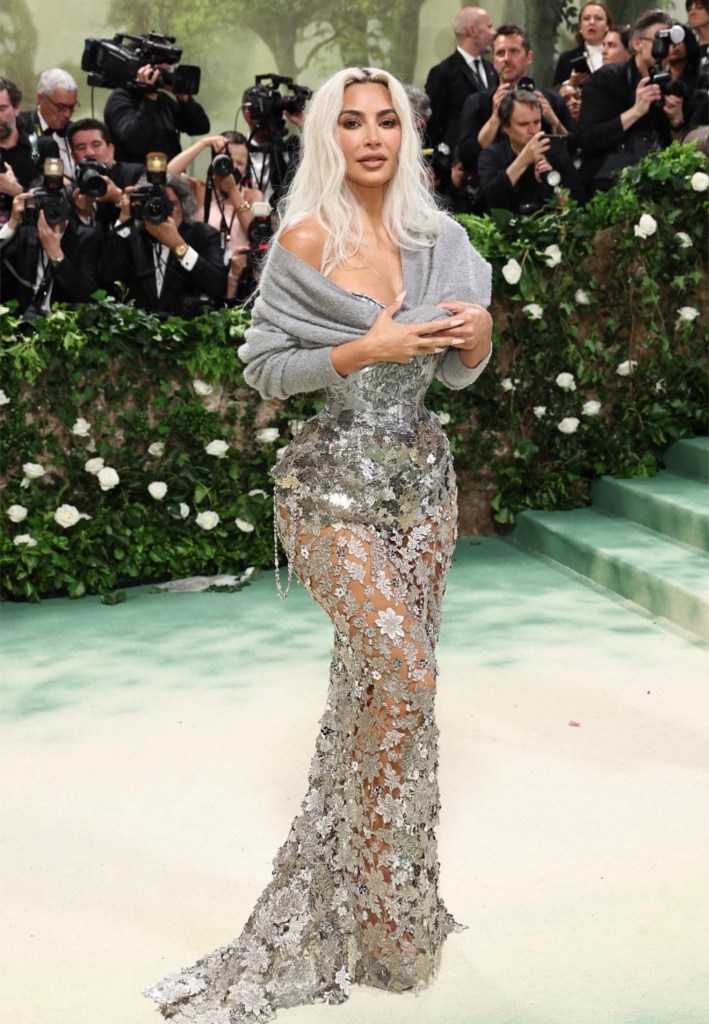
Kim Kardashian at the Met Gala
in an intricately embellished, body-hugging couture gown, paired with a soft gray wrap.
Critics argued that there is an important distinction between allowing someone to rebuild their life and granting them one of the highest cultural honors available in their field.
The cancellation has sparked an uncomfortable but necessary cultural conversation.
Can a person change?
Of course.
Can someone who has done something hateful spend years taking responsibility, seeking treatment, apologizing, and attempting to become a better person?
Yes.
But there is another question that is often confused with forgiveness: Does redemption automatically entitle someone to every honor they might otherwise receive?
Those are not necessarily the same thing.
Galliano’s statement arguably recognizes that distinction more clearly than many public conversations about “cancel culture” do. He did not claim that fifteen years of sobriety erased what happened. He did not argue that his professional comeback obligated the public to celebrate him.
Instead, he acknowledged that atonement cannot be completed through institutional recognition.
That distinction may ultimately be the most significant part of this story.
The question was never simply whether John Galliano should be allowed to exist in fashion again. He already does. He rebuilt a career and spent a decade leading one of the industry’s most respected houses.
The question was whether the Metropolitan Museum of Art should make him the centerpiece of its most glamorous and globally visible annual event.
Ultimately, the answer became no.
And perhaps that’s where this story becomes more complicated than the simplistic language of either “cancel culture” or unconditional forgiveness.
A person can change.
A person can deserve forgiveness.
A person can rebuild their life.
And institutions and communities can still decide that certain honors are not appropriate.
Those ideas can exist at the same time.
For now, John Galliano: Horizons will remain an exhibition that never happened. The Met has said it will announce a replacement exhibition and new details regarding the 2027 Met Gala at a later date.


Leave a comment