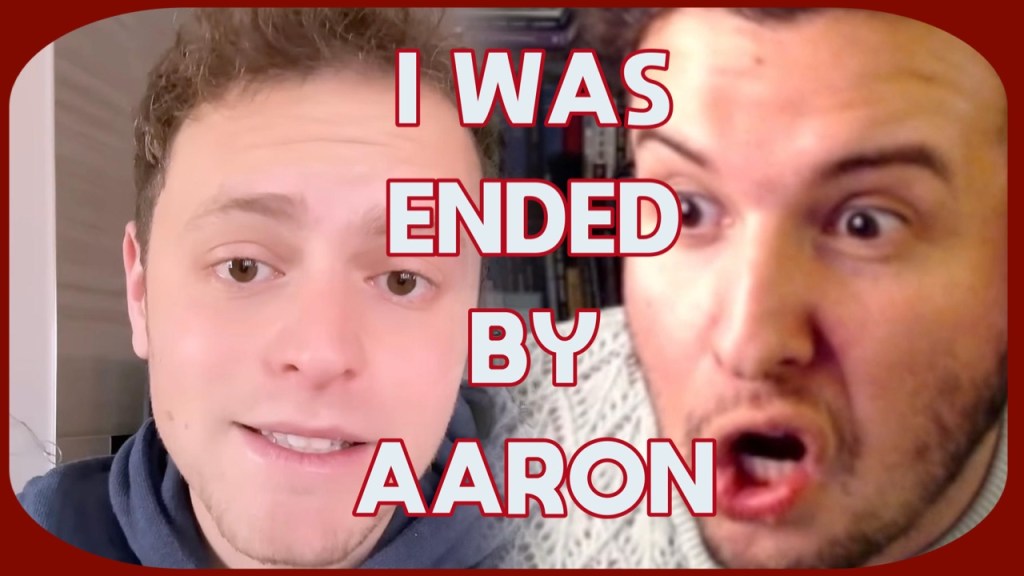
There is something uniquely humbling about realizing that you fell for misinformation publicly.
Especially when the person you inadvertently spread misinformation about shows up personally to correct you.
That is essentially what happened to me this week.
I was scrolling through Instagram when I came across a video discussing political influencers, propaganda, and undisclosed political payments. The video included legitimate information—or at least information that appeared to be grounded in real events. It referenced reporting about political influencers receiving money and concerns about undisclosed sponsored messaging. It also discussed legislation associated with Adam Schiff concerning transparency around paid political influence online.
Then it used political commentator Aaron Parnas as an example.
According to the video, Parnas had allegedly received money connected to political campaigns or political organizations. I reacted to the video with what was intended to be a humorous, unserious post on my personal Threads account. I joked that my “psychic powers” had once again proven themselves because I had previously unfollowed Parnas after deciding his content wasn’t for me.
Then Aaron Parnas responded.
And, well, he ended me.
Publicly.
After his response, I went back and began examining the claims more carefully. What I discovered was an important lesson in how misinformation can actually function.
The video I had watched did not appear to be entirely fabricated. That is precisely what made it convincing.
It contained references to legitimate conversations surrounding political influence online. There have been genuine concerns about influencers being compensated for political messaging without clearly disclosing those relationships. There are legitimate debates about transparency, campaign influence, and the increasingly blurry line between journalism, commentary, advertising, and political advocacy.
But embedded within that broader context was a specific claim about an individual that I could not independently verify.
That was the claim I reacted to.
And that distinction matters.
The Most Effective Misinformation Doesn’t Always Look Fake
When people imagine propaganda, they often imagine something obvious.
A poorly edited video. A ridiculous conspiracy theory. A fake photograph. A headline written entirely in capital letters claiming that the government is hiding aliens underneath a Walmart.
But sophisticated misinformation doesn’t always work that way.
Sometimes it is built around reality.
A real news story.
A real piece of legislation.
A real investigation.
A real political controversy.
Then, somewhere within all of those legitimate facts, a misleading claim is inserted.
The surrounding information creates credibility. By the time the viewer encounters the falsehood, they have already accepted the broader narrative as trustworthy.
That is what makes misinformation increasingly difficult to navigate online.
And frankly, I fell for it.
Owning Being Wrong Shouldn’t Be Controversial
The internet has created an environment where admitting a mistake is often treated as weakness.
People delete posts.
Quietly change captions.
Pretend something never happened.
Or, worse, double down.
I don’t think that helps anyone.
If we expect politicians, journalists, commentators, and institutions to correct misinformation, then ordinary people should also be willing to acknowledge when they get something wrong.
I reacted to information that I should have investigated more carefully.
That’s true.
The post was intended as a joke. It wasn’t a carefully researched Truth Crave report or an investigative article. It was an immediate reaction on my personal social media account to something I had just seen while scrolling.
But intention does not magically transform inaccurate information into accurate information.
And that’s an important distinction.
The fact that something is a joke doesn’t mean we shouldn’t consider whether the underlying claim is true.
So I’m acknowledging it.
I got it wrong.
The Internet Roast Was Actually Pretty Funny
Now, I would be lying if I said I didn’t find some of the responses hilarious.
People absolutely roasted me.
And honestly? Some of it was deserved.
The idea of publicly declaring that your “third eye” detected propaganda, only to discover that your third eye had apparently been looking at propaganda itself, is objectively funny.
My third eye was not third-eyeing.
It was apparently on vacation.
But beyond the jokes, I think this experience raises a more interesting question about the information environment we’re all living in.
How often are we reacting to information before verifying it?
How often do emotionally satisfying narratives bypass our skepticism?
And how often does misinformation successfully spread precisely because it contains enough truth to feel credible?
Everyone Is Vulnerable
One of the biggest mistakes we make when discussing misinformation is imagining that only stupid people fall for it.
That’s comforting.
It’s also dangerous.
Intelligent people fall for misinformation.
Politically engaged people fall for misinformation.
Journalists have fallen for misinformation.
Activists fall for misinformation.
People who consider themselves media literate fall for misinformation.
Nobody is permanently immune simply because they believe they are too smart to be manipulated.
In fact, believing you’re incapable of being manipulated might make you even easier to manipulate.
We are all navigating an information ecosystem designed around speed, emotion, engagement, outrage, and virality. Social media encourages immediate reactions. The algorithm does not reward someone for taking twenty minutes to investigate the origins of a video before commenting on it.
It rewards engagement.
And sometimes the fastest reaction wins.
Until it doesn’t.
Maybe We Need to Normalize Saying, “I Was Wrong.”
I don’t regret making this video.
Not because I’m proud that I fell for misleading information, obviously.
But because I think there is value in publicly acknowledging how it happened.
We need more people willing to say:
I believed that. Then I looked into it. I was wrong.
That shouldn’t destroy someone’s credibility.
If anything, the willingness to correct yourself should be part of credibility.
The alternative is much worse: a culture where everyone is so terrified of admitting mistakes that misinformation becomes permanently attached to their identity.
I’m still going to have opinions.
I’m still going to criticize political institutions.
I’m still going to question establishment narratives.
And yes, I’m still going to occasionally make unserious jokes online.
But skepticism should apply to information that confirms our biases too—not just information we disagree with.
Because apparently, sometimes the propaganda isn’t coming from where you expected.
Sometimes you’re scrolling Instagram, laughing at a video, trusting your psychic third eye—
And then Aaron Parnas shows up in your notifications to inform you that you’ve been completely and utterly ended.
By jonathan Márquez and Duck.ai
Watch my Reaction here:


Leave a Reply