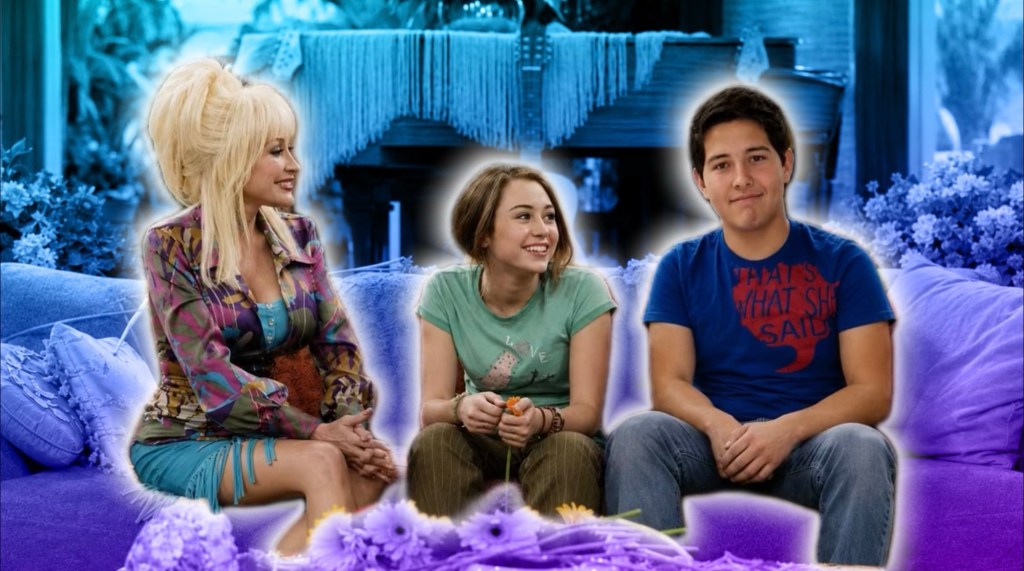
When I heard that Dolly Parton had died, my first reaction was not simply sadness. Honestly, I said why couldn’t it be trump. Then I thought about America. Dolly Parton had been part of my life since childhood, even though I didn’t grow up in the United States. I grew up in Mexico. I knew her songs before I really understood who she was. I knew “9 to 5.” I knew “I Will Always Love You.” But I didn’t have the cultural context that many Americans had for Dolly Parton.
Then, as a child, I saw her on Hannah Montana. And something about her immediately felt familiar. I couldn’t have explained it at the time, but I recognized an archetype. She reminded me of a particular kind of northern Mexican woman: the woman who gets dressed up, does her hair, puts on her makeup, takes pride in looking beautiful, has a larger-than-life personality and somehow manages to be both glamorous and completely approachable. The big hair. The femininity. The humor. The confidence. The warmth.
Dolly looked American to me, but somehow she also looked familiar. That became important to me. Because when you grow up outside the United States and consume American movies, television and music, you don’t experience American culture in quite the same way as someone who was born into it. You are constantly constructing an idea of America from fragments. You see the movies. You watch the television shows. You see the celebrities. You hear the music. And somewhere in your childhood imagination, you begin constructing an image of what America is. Dolly Parton became part of that image for me.
Eventually, when I moved to the United States and started to lived as the US citizen I was born, I realized that America was much more complicated than the America I had imagined as a child. Of course it was. America is not one thing. But when I was young, I wanted to believe that the people I saw representing America on television actually reflected the country I was being introduced to. And Dolly Parton was one of the people who made me proud of that imagined America. She was white. She was Southern. She was unmistakably American. She embodied many of the visual characteristics of the romanticized white America that American culture exports to the rest of the world.
But there was something else there. Kindness. Hard work. Humor. Generosity. Talent. A certain humility beneath all the glamour. And, perhaps most importantly, she seemed to understand that being a Christian did not require you to spend your entire life trying to control everybody else’s behavior. For a kid growing up in a Christian country, that distinction mattered. Children often look for adult role models who seem to embody the moral lessons they are being taught. Love your neighbor. Help people. Don’t be cruel. Be generous. Don’t judge people unnecessarily. Take care of those who are struggling. Dolly Parton seemed to embody those values without constantly preaching them. She didn’t need to stand on a stage and scream at people about Christianity. She just seemed to practice the parts of Christianity that a child could actually understand. And she did it while being unapologetically Dolly. The enormous hair. The makeup. The glamorous clothes. The breasts. The jokes. The femininity. The rhinestones. The sexuality. The ambition.
She never seemed interested in apologizing for being a woman who wanted to look beautiful, make money, become famous and build something enormous. And underneath all of that was extraordinary discipline. Dolly Parton wasn’t simply a pretty character America put on television. She was a songwriter, performer, actress, businesswoman and philanthropist who built an extraordinary career through decades of work. Her songs became part of the American musical canon, while her charitable work eventually reached millions of children through the Imagination Library.
That is why her death makes me think about white America. Not because Dolly represented every white American. She obviously didn’t. But because she represented a version of white America that I once believed was the norm. When I was a kid looking at America from Mexico, I didn’t yet understand the country’s racial politics, its political divisions, its history or the enormous contradictions inside American society. I saw the America that television presented to me. And sometimes that America looked like Dolly Parton. It looked friendly. It looked generous. It looked funny. It looked hardworking. It looked glamorous without necessarily being pretentious. It looked Christian without being obsessed with controlling other people’s lives. It looked like someone who could disagree with you without deciding that you were evil. That was the white America I admired.
And maybe that is why the cultural transformation of parts of white America over the last several decades has sometimes been so painful to watch. Every racial and ethnic community contains kindness and cruelty, generosity and selfishness, wisdom and stupidity. But I believe foreign warfare like Fox News spread a mind virus that turned many white Americans into zombies who think that Immigrants are enemies. Minorities are enemies. LGBTQ people are enemies. Poor people are enemies. Liberals are enemies. Democrats are enemies. Sometimes even other Christians are enemies.
A politics of permanent resentment has replaced the idea that your neighbor is somebody you are supposed to love. And I find that profoundly sad. Because when I think about the white American I idolized as a child, I don’t think about Fox News zombies. I think about Dolly Parton. I think about a woman who could be deeply associated with the cultural traditions of white Southern America without becoming consumed by hatred. I think about someone who could be religious without turning religion into a weapon. Someone who could be patriotic without requiring everyone else to prove their loyalty. Someone who could become extraordinarily wealthy without forgetting where she came from. Someone who could look completely ridiculous by conventional standards and somehow make that ridiculousness part of her power. Someone who could be glamorous, funny, sexual, feminine, successful and compassionate all at once. That is the America I thought I was coming to. And I still want that America to exist.
I want white Americans to have their Dolly Parton moments again. I want an America where being a white Christian from a small town doesn’t automatically have to mean becoming a soldier in somebody else’s culture war. I want people to remember that loving your neighbor is supposed to include the neighbor who doesn’t look like you, worship like you, vote like you or come from the same country as you. I want the people who have been taught to fear everyone around them to discover that they have been sold a lie.
Because the America I fell in love with from Mexico was never supposed to be an America where everyone hated each other. It was an America where ordinary people could build extraordinary lives. Where somebody born in poverty could become a songwriter whose words would eventually be sung around the world. Where a woman could walk onto a television screen with enormous hair, enormous confidence and an enormous personality and somehow make a kid thousands of miles away feel like he already knew her. That was Dolly Parton’s gift. She made America feel familiar. And now she’s gone.
But I don’t want her death to symbolize the disappearance of the America she represented. I want it to remind us that America doesn’t have to be defined by its angriest people. It doesn’t have to be defined by cable-news outrage, political hatred or endless culture-war battles. There is another American tradition. The neighborly one. The generous one. The hardworking one. The funny one. The imperfect but fundamentally decent one. The America that doesn’t need to hate somebody else in order to feel proud of itself. For me, Dolly Parton represented that America. Maybe she wasn’t the America that actually existed in its entirety. Maybe, in some ways, she was the America I desperately wanted to believe existed. But that’s the beautiful thing about cultural icons. Sometimes they don’t just tell us who we are. Sometimes they tell us who we could be.
And if Dolly Parton’s life leaves me with one hope, it is this: I hope white America doesn’t lose the best parts of itself. I hope it heals from the politics of hatred. I hope Christianity becomes less about policing strangers and more about loving neighbors. I hope patriotism becomes less about deciding who belongs and more about making the country worth belonging to. And I hope that somewhere beneath all the anger, fear and political propaganda, the America that a Mexican kid once saw on television is still there. The America that looked a little ridiculous. A little glamorous. A little Southern. Very hardworking. Very talented. And, above all, kind.
That is the America I saw in Dolly Parton. And I hope is not gone with her.


Leave a Reply