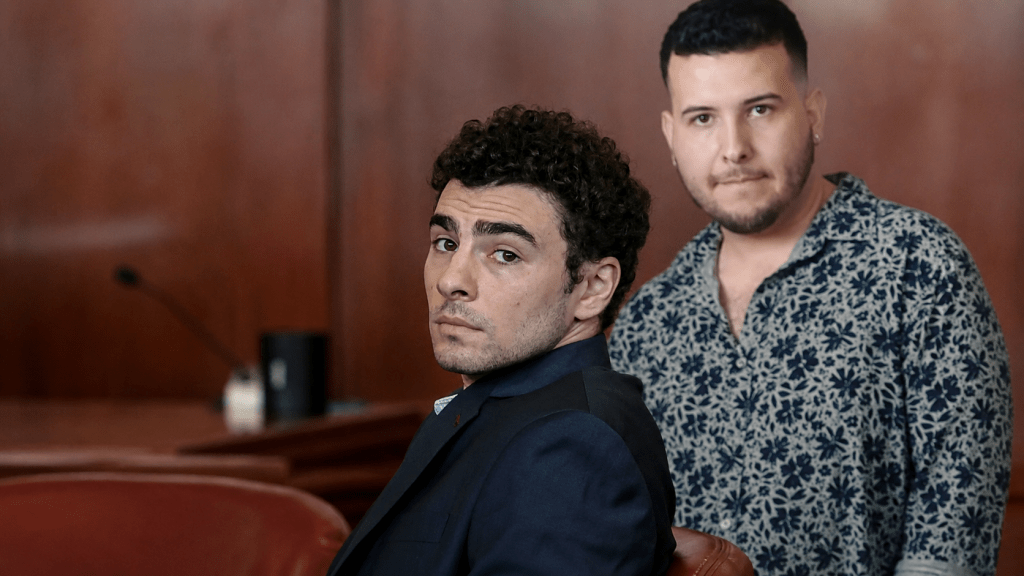
Luigi Mangione has pleaded guilty in federal court to two stalking charges connected to the 2024 killing of UnitedHealthcare CEO Brian Thompson.
On August 14, Mangione admitted in court that he planned the attack, tracked Thompson and shot him. He faces potentially life in federal prison, with sentencing scheduled for December 18. He also continues to face a separate murder case in New York, although his attorneys are challenging that prosecution on double-jeopardy grounds. (Reuters)
Mangione will face justice for killing Brian Thompson.
But this case exposed something much bigger than one man.
It exposed the rage building inside a country where healthcare has become an enormous financial industry while ordinary Americans are increasingly treated like revenue streams.
And the numbers are difficult to ignore.
According to the Centers for Medicare & Medicaid Services, the United States spent $5.3 trillion on healthcare in 2024 — $15,474 for every person in the country — and healthcare consumed 18% of the entire U.S. economy. Healthcare spending increased 7.2% that year. Private health insurance spending alone reached approximately $1.64 trillion. (Centers for Medicare & Medicaid Services)
Think about that.
Nearly one-fifth of the American economy is devoted to healthcare, yet Americans still routinely struggle to afford healthcare.
That is not what a functioning healthcare system should look like.
The United States is also an extreme outlier internationally. The OECD estimates that the United States spent approximately $14,885 per person on healthcare in 2024, compared with an OECD average of about $5,967. America spends roughly two and a half times what other wealthy democracies spend. (OECD)
And what are Americans getting for all that money?
Bills.
Deductibles.
Prior authorizations.
Denied claims.
Medical debt.
Fear and financial ruin.
In 2026, the average deductible for an Affordable Care Act Marketplace plan jumped 37%, increasing by more than $1,000 to approximately $3,786. KFF described it as the steepest increase in Marketplace deductibles ever recorded. (KFF)
At the same time, a January 2026 KFF poll found that 66% of insured adults considered delays and denials by health insurers a major problem, while one-third said an insurer had denied coverage for a healthcare service or medication prescribed by their doctor within the previous two years. (KFF)
And then there is medical debt.
KFF estimates that Americans owe at least $220 billion in medical debt. Approximately 14 million adults owe more than $1,000, while around 3 million owe more than $10,000. (KFF)
Another KFF survey found that 41% of American adults currently have some form of healthcare debt, including bills they cannot pay, bills being paid over time, credit-card debt used to pay medical expenses, loans and money borrowed from family or friends. (KFF)
This is where the Mangione case becomes impossible to discuss honestly without discussing the system surrounding it.
Mangione’s decision to kill the greedy CEO was a criminal act, and he is being held accountable for it. But why is letting people die to make profit not equally as bad? Why is that normalized? Who really benefits from that?
But pretending the anger surrounding this case appeared out of nowhere is also dishonest.
Mangione’s own statements have connected his actions to his frustrations with the American healthcare system, including his personal experiences with chronic pain and insurance. (Reuters)
That does not make his actions acceptable.
It does, however, help explain why his case became a lightning rod for a much larger public frustration and sympathy and support for Luigi.
People are angry because they are being financially squeezed while being told that this is simply the price of living in America. When they have become aware it’s only this bad because sell out corrupt politicians allow it.
Pay the premium.
Pay the deductible.
Pay the copay.
Pay the prescription price.
Fight the denial.
Fight the bill.
And if you still cannot afford it, go into debt.
Meanwhile, the healthcare industry has enormous political power.
The pharmaceutical industry, insurance companies, hospitals and other healthcare interests spend enormous amounts of money influencing Washington and state governments. And politicians from both parties have benefited from an industry that has become deeply embedded in American politics.
This is why I reject the idea that this is simply a Republican problem or a Democratic problem.
It is an American political problem.
The working class is told to fight each other over political parties while corporate healthcare interests continue to operate in a system where enormous amounts of money are at stake.
And elected officials who are supposed to represent working people too often become sellout puppets to the industries they are supposed to regulate.
That is the political establishment people are angry about and why many started to belive violence is the only way forward. The civilized path to fix this issues are completely corrupted.
The healthcare industry itself is not some powerless victim of government.
It is a massive economic and political force.
Even the federal government acknowledges that insurance premiums can contain substantial administrative costs and profits. The Affordable Care Act’s medical-loss-ratio rules exist precisely because lawmakers recognized that insurers could otherwise devote significant portions of premium dollars to administrative expenses rather than medical care. (Centers for Medicare & Medicaid Services)
So when Americans look at a healthcare system consuming $5.3 trillion a year and still leaving millions trapped in debt, denied care and financial insecurity, asking questions about the structure of that system is not radical.
It is necessary.
Mangione is going to face justice.
But when will America get justice from decades of systematic exploitation allowed by corrupt sell out politicians?
When will an American family be able to get sick without fearing that one diagnosis could destroy their finances?
When will insurance coverage actually mean that you are covered?
When will healthcare stop being treated primarily as an industry and start being treated as what it should be: a basic necessity of human life?
And how much financial exploitation can the American healthcare oligarchy impose on ordinary people before the system itself becomes even more unsustainable?
America should never accept political violence as the civilized way to fix political or economic problems.
But America also cannot continue pretending that the anger behind cases like Mangione’s does not exist and that the government is actually in their side when majority of politicians are corrupt sell outs .
The answer becomes violence.
The answer should be political accountability, healthcare reform and an economic system that stops treating people’s illnesses as opportunities for profit. But unfortunately under the current cohort of politicians accountability and duty to the people are completely gone.
Mangione’s criminal case may be moving toward its conclusion.
The healthcare crisis that helped make his case a national symbol is nowhere near finished and sell out politicians refuse to acknowledge they are the problem that lead to this violence in the first place. If our elected officials where truly looking after their constituents there would not be this systemic financial exploitation of Americans and people wouldn’t have to choose violence. But as long as our leaders reject political integrity and continue selling out. I hope the American people continue taking matter to their own hands. That’s why they gave you the second amendment.
By Jonathan Marquez and DeepSeek


Leave a Reply