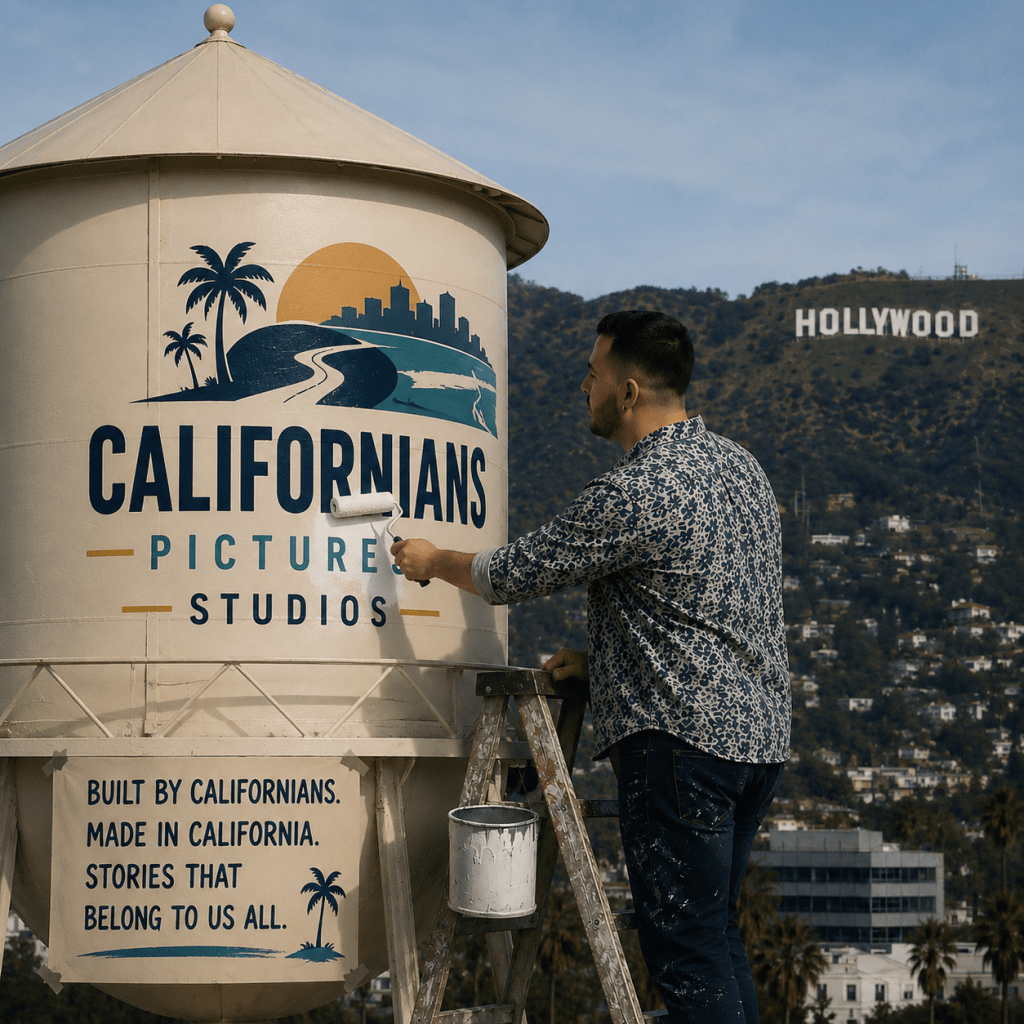
California has spent decades trying to keep Hollywood in California.
We offer tax credits. We subsidize production. We incentivize soundstage construction. We provide public resources to the entertainment industry. We defend California’s position as the world’s premier media-production center.
And it works.
But there is a question we rarely ask:
Why does California keep subsidizing Hollywood without ever owning a meaningful piece of the infrastructure it is helping finance?
That question deserves serious consideration.
California should create a publicly owned film and television studio — financed through a California Film Fund and ultimately owned by the people of California.
Not a government propaganda studio.
Not a bureaucracy deciding which movies Californians are allowed to watch.
And certainly not politicians picking their favorite filmmakers.
I mean something much more ambitious: a professionally operated public entertainment company designed to build permanent California assets, create jobs, finance productions and return economic value to the people who helped make the industry possible.
California Already Invests in Hollywood
This isn’t an argument that California should suddenly start spending public money on entertainment.
California is already doing that.
The state’s Film & Television Tax Credit Program 4.0 provides $3.75 billion over five years, with $750 million allocated each fiscal year through 2030.
And the investment is producing enormous economic activity.
In July 2026, California announced that 170 projects awarded under the expanded program were projected to generate $6.6 billion in economic activity and nearly 35,000 cast and crew jobs across the state.
That’s not insignificant.
California clearly believes the entertainment industry is important enough to justify billions in public incentives.
So why stop at incentives?
Why not build something that Californians actually own?
We Already Have the Beginning of the Infrastructure
California has already recognized that production infrastructure matters.
The state created the Soundstage Filming Tax Credit Program to encourage construction, renovation and conversion of soundstages. The program has a $150 million allocation and runs through 2032.
Again, the question is obvious:
If taxpayers are helping encourage the construction of entertainment infrastructure, why couldn’t taxpayers own some of that infrastructure?
Instead of simply giving a private company an incentive to build a soundstage, California could eventually build and own soundstages itself.
Instead of constantly asking private studios to bring productions to California, California could have its own production facilities ready to welcome them.
Instead of treating Hollywood as something California must continually convince corporations to preserve, California could begin treating entertainment as a strategic public economic asset.
That’s a fundamental change in philosophy.
From Subsidizing Hollywood to Owning Hollywood Infrastructure
The current model is basically:
California taxpayers → tax incentives → private companies → private assets → private profits.
A California Film Fund could create another model:
California investment → public assets → productions → jobs + economic activity + potential returns → reinvestment in California.
That doesn’t mean the state should own every movie.
It means the state could own the infrastructure and investment vehicle that helps make movies possible.
Imagine a publicly owned California Studios corporation with professional management and strict independence from day-to-day political control.
It could own:
- Soundstages
- Production offices
- Post-production facilities
- Visual-effects facilities
- Animation facilities
- Production equipment
- Recording facilities
- Workforce-training centers
- Film schools or apprenticeship programs
- Affordable housing connected to production hubs
- A film and television investment fund
And the California Film Fund could finance productions.
Not every movie would make money.
That’s true in Hollywood today.
But when a publicly financed production succeeds, California could potentially receive licensing, distribution, investment or other revenues rather than having taxpayers receive only the indirect economic benefits.
The money could then be recycled into the next generation of California productions.
A revolving public investment ecosystem.
Can you Imagine California Buying Paramount Studios if they leave the state?
Think about what that could mean for independent filmmakers.
A young filmmaker from Los Angeles shouldn’t necessarily have to convince a giant corporation that their story is commercially safe before they can access serious production resources.
A filmmaker from Oakland, Fresno, Sacramento, San Diego, Riverside or the Central Valley could potentially pitch a California Film Fund project.
The fund could finance a percentage of the production.
The publicly owned studio could provide facilities.
California workers could be hired.
California businesses could provide services.
And the finished production could go into the marketplace like any other commercial film.
The state wouldn’t need to control the creative product.
It would simply participate in the economic upside.
That’s an important distinction.
This Wouldn’t Have to Be “Government Movies”
Critics would immediately say:
“You want the government making movies?”
No.
That’s not the proposal.
The proposal is closer to how we think about other public economic infrastructure.
California doesn’t need politicians choosing camera angles.
It needs an independent institution with professional executives, producers, accountants, lawyers and entertainment-industry experts.
The board could be structured to prevent political interference.
There could be strict conflict-of-interest rules.
There could be transparent financial reporting.
Projects could be evaluated using professional investment criteria.
And there could be legal protections preventing elected officials from using the fund as a political slush fund.
The goal should be public ownership without political micromanagement.
California Should Think Bigger About Its Entertainment Industry
California created the California Film Commission in 1984 to strengthen the state’s position as a premier location for media production and support production-related jobs and economic activity.
That mission remains important.
But the world has changed.
California is no longer competing only with New York.
It is competing with Georgia, New Mexico, Louisiana, Canada, the United Kingdom, Australia and other jurisdictions offering aggressive production incentives.
California is essentially competing in a global bidding war for its own industry.
At some point, we have to ask whether endlessly increasing subsidies is the best long-term strategy.
Or whether California should build assets that cannot simply pack up and leave.
A soundstage owned by California can’t move to Georgia.
A post-production facility owned by California can’t relocate to Canada overnight.
A publicly owned production campus remains a California asset.
And if properly managed, it could generate revenue for decades.
Start Small or Buy Paramount Studios if they leave California!
Nobody is suggesting California needs to spend $10 billion tomorrow building a new Hollywood. But California should definitely buy Paramount Studios if they leave California and start a brand new company.
Maybe a publicly owned production campus in Los Angeles County.
Then expand.
A soundstage.
Post-production.
Animation.
Workforce development.
Independent film financing.
Eventually, perhaps additional campuses throughout California.
The initial investment could be structured as a long-term public economic-development project rather than an attempt to immediately turn a profit.
The objective would be to create a permanent ecosystem.
And perhaps the most interesting possibility is that the California Film Fund could eventually become self-replenishing.
Successful investments generate returns.
Returns finance new productions.
New productions create jobs.
Jobs create economic activity.
Economic activity generates additional tax revenue.
And the cycle continues.
What If Californians Could Own a Piece of Hollywood?
This is the part that makes the idea bigger than another government program.
Imagine telling Californians:
You don’t just live next to Hollywood. You own part of the infrastructure that makes Hollywood possible.
Not through a stock-market investment.
Not through a billionaire.
Not through a private-equity fund.
Through a public institution created specifically to ensure that California’s entertainment economy remains a California asset.
Hollywood was built here.
California’s workers built it.
California’s communities hosted it.
California’s taxpayers have spent decades helping keep it here.
Perhaps Californias should stop thinking of themselves merely as Hollywood’s landlords and start thinking of themselves as Hollywood’s owners.
The California Model
California already understands that film and television are economically valuable.
The state already provides billions in incentives.
It already incentivizes soundstage construction.
It already maintains a Film Commission.
It already measures the jobs and economic activity generated by productions.
The next logical question is ownership.
What if California created the nation’s first major publicly owned film and television studio?
A studio owned by Californians.
A fund invested in California filmmakers.
Facilities built in California.
Workers hired in California.
Profits, when they happen, reinvested in California.
That wouldn’t be an attack on Hollywood’s private sector.
It could actually strengthen it.
Private studios would still exist. Independent producers would still exist. Netflix, Disney, Warner Bros. and everyone else could continue doing business here.
But alongside them would be something new:
a California-owned entertainment institution whose mission isn’t simply to maximize private shareholder returns, but to preserve and grow California’s cultural and economic power.
California has spent decades paying to keep Hollywood here.
Maybe it’s time to ask for something in return.
Not control of Hollywood.
Ownership of the future we are helping finance.
By Jonathan Marquez and DeepSeek


Leave a Reply