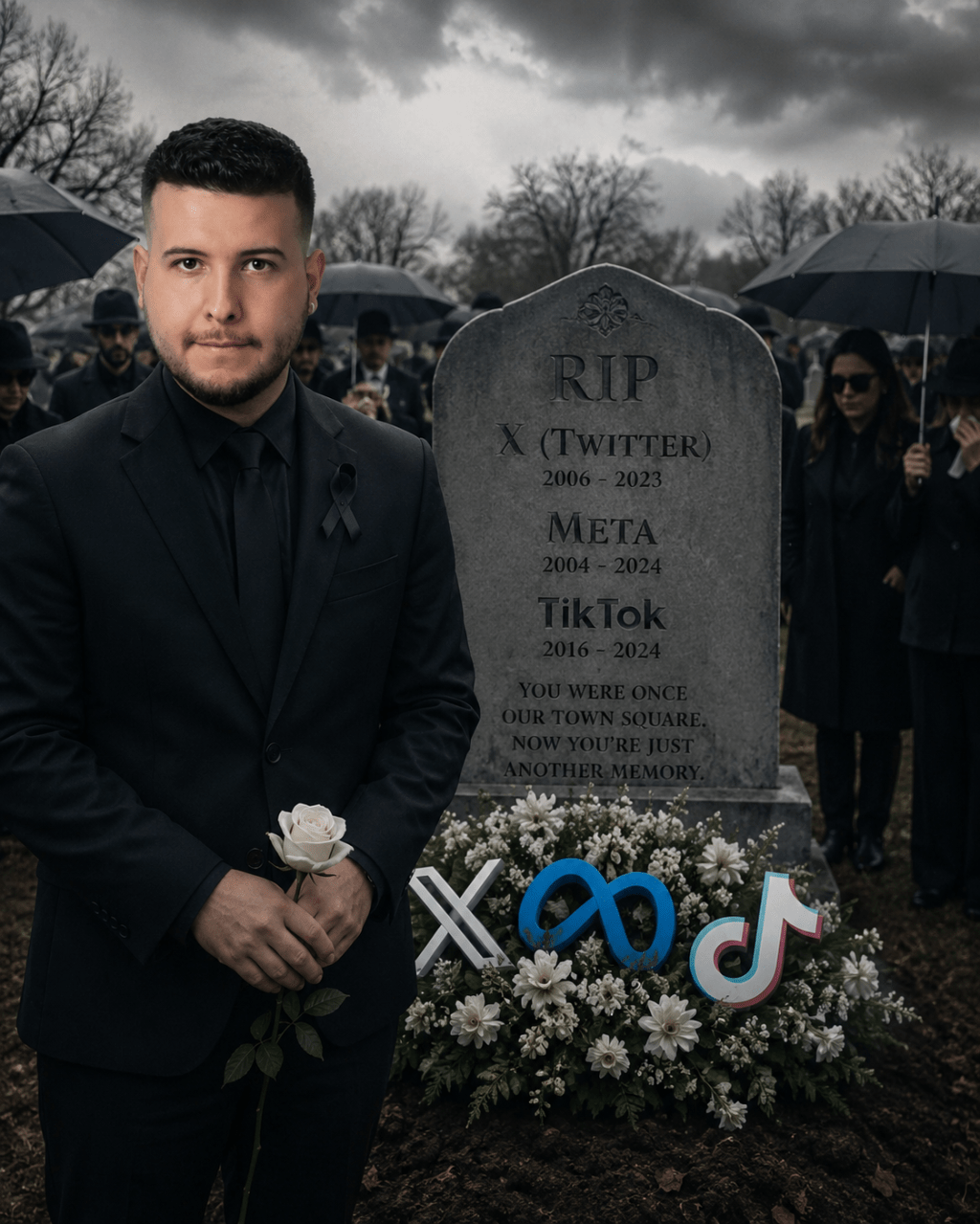
When I asked Grok whether my X account had been shadow banned, its response wasn’t definitive, but it concluded that my account showed “strong signs of limited visibility” based on months of unusually low views and engagement. Whether X calls it a shadow ban, algorithmic deboosting, or simply the result of its recommendation system is almost beside the point. The practical outcome is the same: content that once reached people now struggles to be seen.
That experience forced me to ask a larger question: What is the purpose of social media if the people creating the content receive nothing beneficial in return?
Every minute we spend scrolling creates value for these companies. We generate advertising revenue. We provide engagement metrics. We train recommendation algorithms. We produce behavioral data that can be monetized. Our attention is the product being sold.
In return, we are promised the possibility of being heard.
But what happens when that promise disappears?
If platforms increasingly determine whose voices deserve distribution through opaque algorithms that users cannot inspect or challenge, then participation begins to feel less like a public conversation and more like unpaid labor. We are expected to create content, react to content, and consume content while the platform captures nearly all of the economic value.
Whether the suppression comes from moderation systems, engagement algorithms, anti-spam measures, or business incentives, the result for many creators is identical: they continue producing while their audience quietly disappears or never builds.
That changes the relationship.
If a platform no longer helps distribute my work, why should I continue rewarding it with my attention?
This realization is one reason I have drastically reduced my use of Twitter(x). I still occasionally post, but I no longer feel the fomo urge to remain an active consumer. I refuse to spend hours generating advertising revenue for companies that provide little to absolute no value in return.
In fact, I have begun separating social media from the rest of my digital life. The less data I unvoluntarily hand over, the better. If platforms no longer function as places where ideas can reasonably compete for attention, then they should not expect unlimited access to my time, habits, and personal information.
Many people describe social media as addictive. I know that feeling. Twitter once occupied a significant portion of my day. Today, opening it has become increasingly rare. As my own participation has declined, I have noticed something unexpected: I don’t miss it nearly as much as I thought I would.
Perhaps that is because I no longer see these platforms as communities. I increasingly see them as extraction machines.
That doesn’t mean every unpopular post is being censored. Sometimes content simply fails to resonate. Sometimes algorithms reward different formats or posting habits. But users deserve far more transparency than they currently receive. When distribution is controlled by systems no one outside the company fully understands, suspicion becomes inevitable.
The deeper problem is that the economic relationship has become one-sided.
Social media companies have built trillion-dollar ecosystems from user-generated content and user attention. Yet the overwhelming majority of users receive neither meaningful distribution nor meaningful economic participation. They create the value while shareholders capture almost all of it.
That is not a sustainable social contract at least not for me and I’m over it.
As more people recognize this imbalance, I believe social media consumption will continue to decline. If users conclude they are simply unpaid workers feeding recommendation engines that neither compensate them nor fairly distribute their work, many will begin looking elsewhere.
I know I am.
The next generation of internet navigation infrastructure should not merely maximize engagement for advertisers. They should maximize opportunity for the people whose creativity makes those platforms possible. That means greater transparency, fairer distribution systems, stronger user control over personal data, and economic models that allow users—not just technology companies—to share in the wealth they create.
Social media should empower its users, not merely monetize them.
For too long, we have accepted a bargain in which our attention enriches someone else while our own voices become invisible.
I’m no longer interested in that bargain at all, why would I stay a slave for social media?
If the future of social media is simply to consume, produce free labor, surrender our data, and hope an algorithm decides we deserve to be seen, then perhaps the most powerful act of all is to spend less time there, and I am.
The greatest freedom these platforms cannot monetize is the freedom to walk away. I don’t feel like being their slave who has to pay to get any benefits from the social media platform.
By Jonathan Marquez
 Truth Crave
Leave a comment