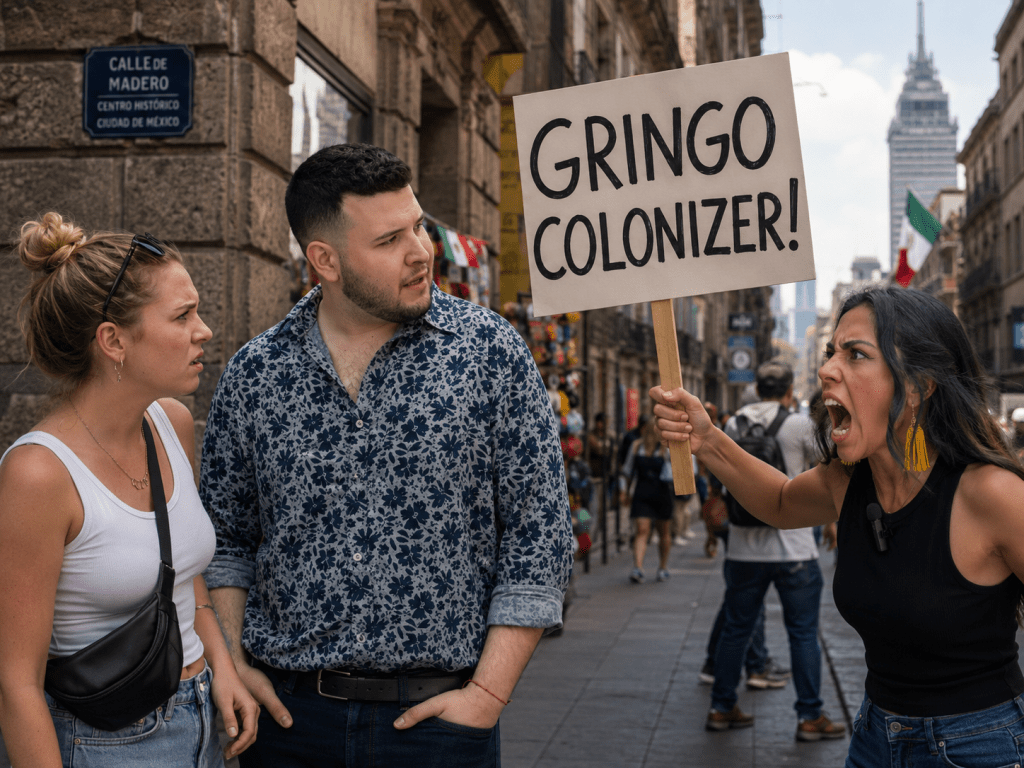
I began following an Instagram page @artmexica about Nahuatl language and pre-Hispanic art years ago because I genuinely wanted to learn more about Mexico’s Indigenous heritage. Like many Mexicans, I believe Indigenous cultures deserve respect, preservation, and celebration.
Unfortunately, I have watched some of the content become increasingly nationalist and openly hostile toward white people and foreigners. What began as discussions about how Indigenous communities remember the colonial period has, in some cases, evolved into claims that modern gentrification or American migration to Mexico is simply another form of colonization.
That comparison is misguided.
Colonization involved conquest, political domination, the imposition of foreign institutions, and the denial of sovereignty to entire peoples. An American nomad in Mexico City because they can no longer afford rent in The USA is not doing any of those things. Many are ordinary people searching for a better quality of life and lower living costs while they have a remote job. They are economic migrants—much like millions of Mexicans who have moved to the United States for the exact same reasons.
Mexicans have long defended our right to seek opportunities abroad. We rightly reject rhetoric that portrays Mexican immigrants as invaders or colonizers of American communities. Yet some people now apply similar language to Americans living in Mexico. That double standard should concern us.
The reality is that migration changes societies. Mexican communities have transformed neighborhoods and cities throughout the United States. Places such as Huntington Park, Santa Ana, and many other communities now have strong Mexican cultural identities that did not exist generations ago. Most of us would never describe that as “recolonization” in any literal sense. It is immigration, cultural exchange, and demographic change—not conquest.
Likewise, Americans moving to Mexico are not colonial administrators. They are individuals responding to economic incentives and seeking better lives for themselves and their families.
None of this means that concerns about housing costs, displacement, or gentrification are illegitimate. Local residents have every right to demand better housing policies, stronger tenant protections, and urban planning that benefits everyone. But blaming ordinary migrants or nomads for systemic economic problems is an old habit that rarely leads to real solutions.
What worries me most is the growing influence of ethnic nationalism in some online spaces. Indigenous pride is something to celebrate. Indigenous languages, art, and traditions are an essential part of Mexico’s identity. But pride in one’s heritage should never become hostility toward other groups.
The same principles that lead us to reject white nationalism in the United States should also lead us to reject Indigenous nationalism when it adopts similar assumptions: that people of certain backgrounds are inherently unwelcome, that migration is a form of ethnic invasion, or that entire groups should be blamed for economic challenges.
Mexico’s future should be built on solidarity rather than resentment. We can honor Indigenous history without embracing xenophobia. We can defend affordable housing without demonizing foreigners. And we can recognize that people everywhere—whether Mexican migrants in Los Angeles or American migrants in Mexico City—are often motivated by the same universal desire: the hope for a better life.
By Jonathan Marquez & Duck.ai
 Truth Crave
Leave a comment