
There are some public figures whose biographies seem almost too complicated to fit into a single narrative. Howard Lutnick is one of them.
His story begins with one of the darkest days in modern American history.
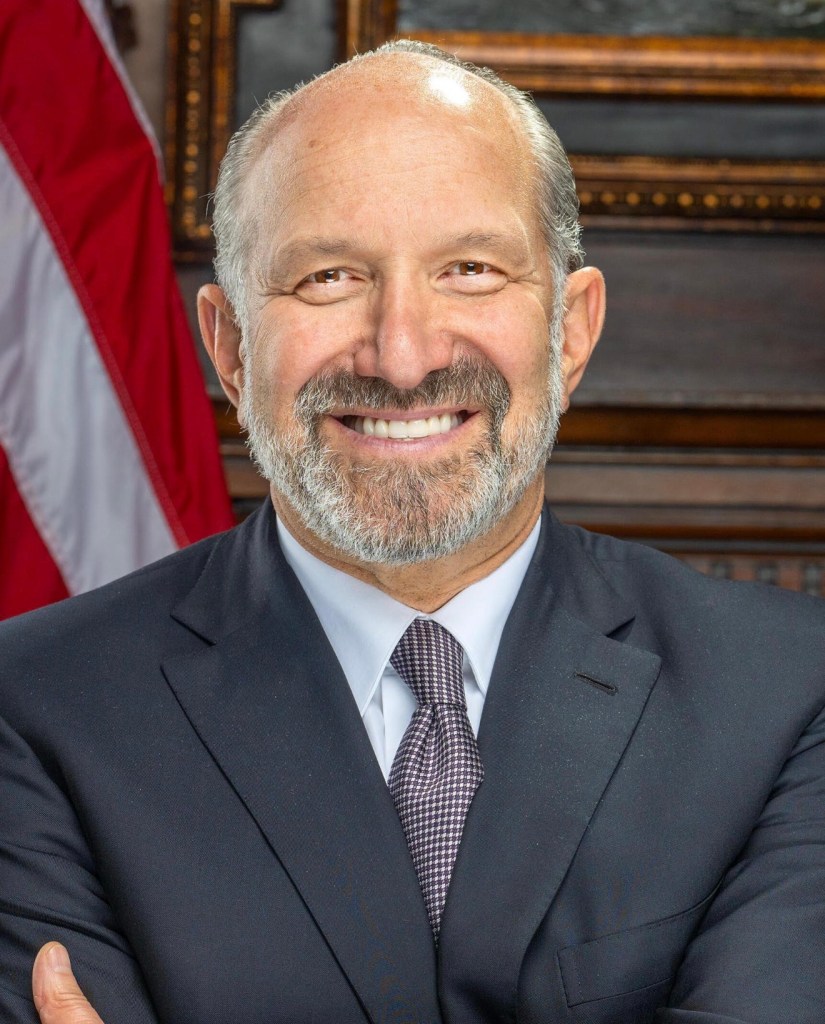
On September 11, 2001, Cantor Fitzgerald occupied floors 101 through 105 of the World Trade Center’s North Tower. Of the company’s 960 New York-based employees, 658 were killed when terrorists attacked the World Trade Center. Among the dead were Lutnick’s younger brother, Gary, and his close friend Doug. Lutnick himself survived because he was taking his son to his first day of kindergarten rather than following his normal routine. (Forbes)
Lutnick subsequently became one of the most recognizable corporate figures associated with the aftermath of 9/11. He helped rebuild Cantor Fitzgerald and established a financial commitment to the families of employees who had died. Cantor pledged 25% of its profits for five years and healthcare coverage for victims’ families for ten years. The company says those commitments ultimately resulted in approximately $180 million being distributed to families. (Cantor)

That part of Lutnick’s story is not simply a matter of public relations. Cantor survived an extraordinary corporate catastrophe and eventually expanded dramatically. The company says it grew to more than 14,000 professionals after Lutnick’s tenure, while its charitable operations became an enduring part of its identity. (Cantor)
But the 9/11 chapter is not the entirety of Howard Lutnick’s career.
The other side of the story
Forbes’ September 11, 2026 profile revisits Lutnick’s reputation on Wall Street, describing him as a highly aggressive operator and reporting longstanding criticism concerning his relationships with business partners and employees. Forbes also reports on a 2023 lawsuit alleging that roughly 40% of Lutnick’s former partners did not receive all the money they were owed when they left. These are allegations and disputes surrounding his business practices, not findings that Lutnick has been criminally convicted of wrongdoing. (Forbes Mirror)
That distinction matters.
Public figures—particularly people who hold senior positions in government—can be subjected to intense scrutiny without every allegation becoming an established fact. A lawsuit can contain allegations that are disputed or unresolved. A critical characterization from a former business associate is not the same thing as a judicial finding.
The more interesting question is therefore not whether every criticism of Lutnick is true. It is how the different chapters of his career fit together.
The businessman who became nationally associated with resilience after 9/11 eventually became one of the country’s most prominent financial executives. And in 2025, that financial executive entered government.
From Wall Street to Washington
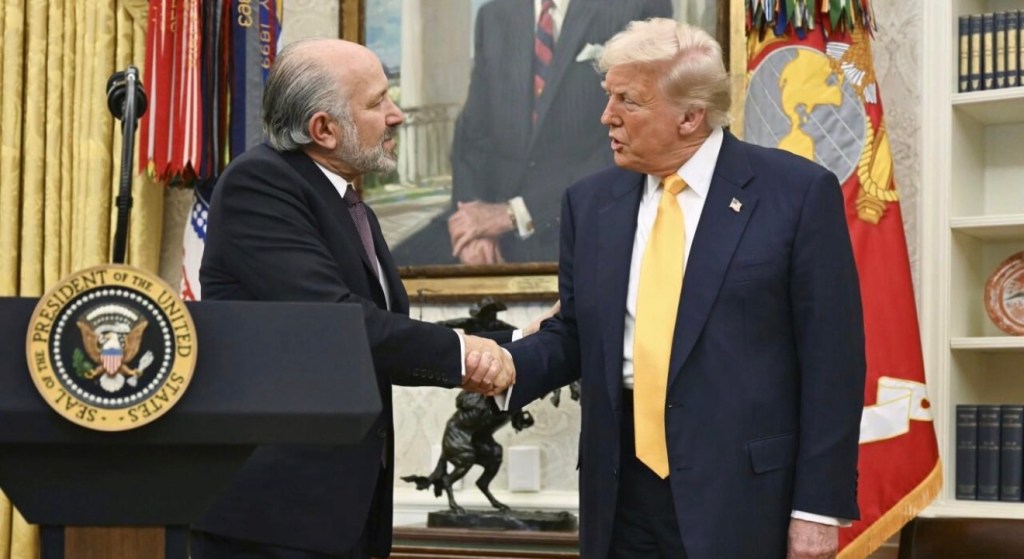
Lutnick was nominated by President Donald Trump to serve as Secretary of Commerce and was subsequently confirmed by the Senate. He stepped down from his leadership positions at Cantor Fitzgerald as required by his move into government. (Cantor)
His transition from Wall Street executive to Cabinet secretary also brought renewed attention to his wealth.
According to Forbes, Lutnick and his family’s estimated fortune has risen to approximately $7.3 billion, more than doubling since he joined Trump’s Cabinet. Forbes attributes a substantial portion of the increase to the family’s indirect interest in Tether through Cantor Fitzgerald. (Forbes Mirror)
That figure is striking because it places Lutnick’s government career alongside an enormous private financial empire.
For a Commerce Secretary whose portfolio includes trade, business, economic policy and commercial interests, the relationship between government power and private wealth naturally becomes part of the public record worth examining.
But wealth alone does not demonstrate misconduct.
The relevant questions are more specific: How are conflicts of interest handled? What financial interests are disclosed? What decisions does a government official make? And are those decisions consistent with applicable ethics requirements?
Those questions can be investigated without turning suspicion into fact.
The Epstein connection
Then there is another part of Lutnick’s biography that has received renewed attention: his documented association with Jeffrey Epstein.
This requires particular care because association is not proof of criminal conduct.

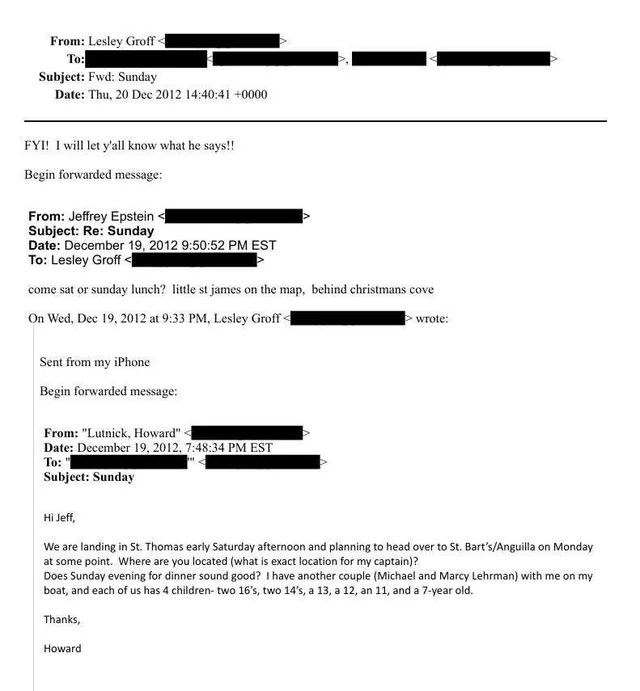
Emails released in connection with the federal government’s Epstein-related document releases show that Lutnick, his wife and their children planned a visit to Epstein’s private island, Little St. James, in 2012. CBS reported that the emails showed the family accepting an invitation to visit the island. (CBS News)
ABC News has likewise reported that federal documents contain references to Lutnick and Little Saint James. (ABC News)
The issue received additional attention because a photograph released through the Justice Department’s Epstein document collection appeared to show Lutnick with Epstein and other people on Little St. James.
Lutnick has described his interactions with Epstein as limited and has denied having a significant relationship with him. The existence of a documented visit and photographs does not establish that Lutnick participated in Epstein’s sexual-abuse crimes.
That distinction should remain central to any responsible discussion of the Epstein files.
The public has a legitimate interest in knowing who interacted with Epstein, when those interactions occurred and what the documentary record shows. But the existence of a photograph, an email, a dinner invitation or a visit is not itself evidence of participation in a crime.
The money question
Another issue surrounding Lutnick’s 9/11 story has circulated heavily online: claims that he personally profited from the deaths of Cantor Fitzgerald employees through insurance or other financial arrangements.
That claim needs to be treated much more cautiously.
There is extensive documentation concerning Cantor Fitzgerald’s financial arrangements following 9/11, including the company’s pledge to provide families with a percentage of profits and healthcare benefits. There was also criticism of the company’s handling of employee compensation immediately following the attacks. Historical reporting and later accounts document those controversies. (Chronicle of Philanthropy)
But that is different from establishing that Lutnick personally “profited from their deaths.”
The available evidence supports discussing the company’s financial decisions and the controversies surrounding them. It does not justify presenting the stronger accusation as an established fact without additional evidence.
That distinction is particularly important because 9/11 is not merely a chapter in a business biography. It represents the deaths of thousands of people and the permanent loss experienced by their families.
A complicated legacy
Twenty-five years after 9/11, Howard Lutnick occupies a remarkably different position from the one he held in the days after the attacks.
He went from being the executive of a devastated Wall Street firm to rebuilding that company into a much larger financial enterprise. He became a billionaire. He entered the highest levels of the federal government. And now his business practices, wealth and past association with Epstein are all receiving renewed scrutiny.
None of those facts, individually, provides a complete explanation of who Howard Lutnick is.
The 9/11 story cannot simply be erased because later controversies exist. At the same time, the tragedy of 9/11 should not place someone’s subsequent career beyond scrutiny.
Both parts of the story can be true at once: Lutnick experienced an extraordinary personal and professional tragedy, helped rebuild Cantor Fitzgerald and participated in substantial charitable commitments to victims’ families—and his later business career and documented association with Epstein can still be examined independently.
That is ultimately what makes the Lutnick story worth examining.
Not because every allegation about him is true.
Not because every criticism is false.
And not because association with a controversial figure automatically proves criminal conduct.
It is because the public record contains enough documented facts, disputes and unanswered questions to warrant separating what we know from what we merely suspect.
For a billionaire who now serves as one of the most senior economic officials in the United States, that distinction matters.
The story of Howard Lutnick is no longer only about what happened to him on September 11, 2001. It is also about what happened in the quarter-century that followed.
 Truth Crave
Leave a comment