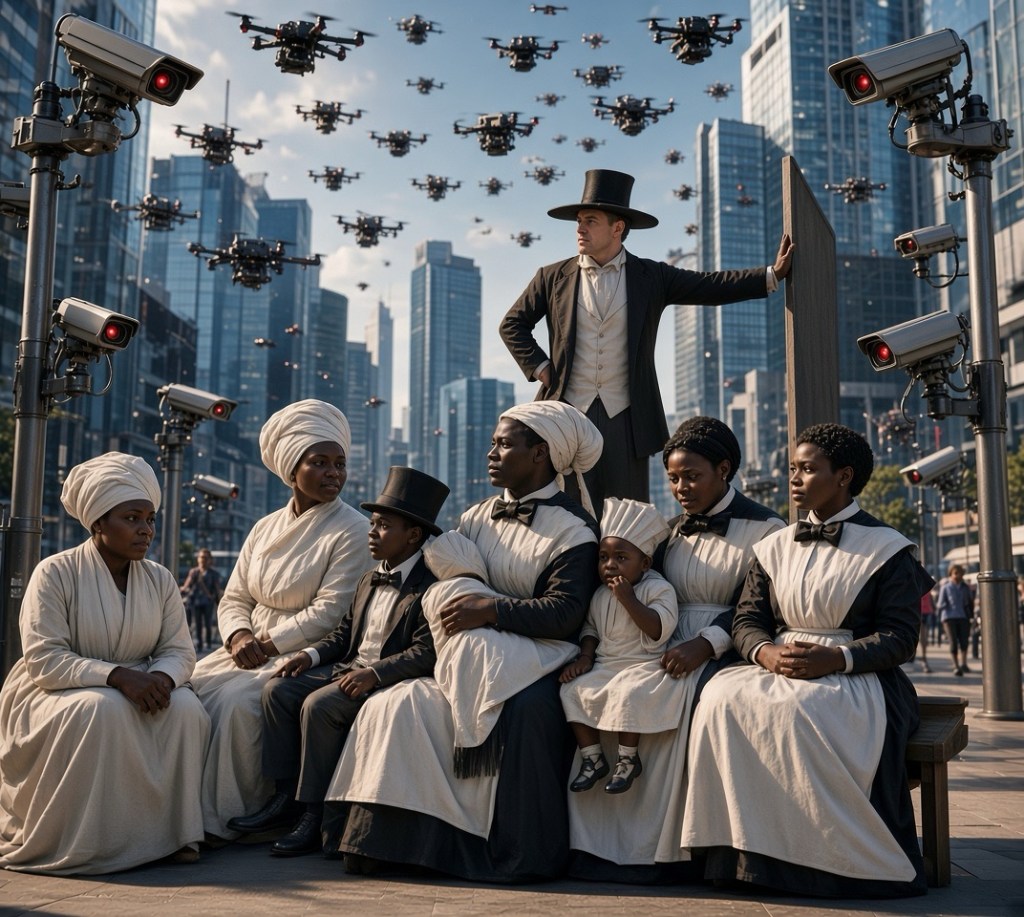
America is building a vast surveillance infrastructure. The question is whether we will allow private companies to own the machinery that watches us.
America is entering a new era of privatized surveillance infrastructure, and we should be much more uncomfortable about it.
The technology is usually sold to us in the language of safety: crime prevention, stolen-car recovery, neighborhood security and faster investigations. But beneath that reassuring language is a much bigger transformation. Private companies are increasingly building the infrastructure through which our movements and daily activities can be observed, recorded and analyzed.
Flock Safety is one of the clearest examples.
A recent New York Times investigation reported that Flock has approximately 120,000 cameras across every state except Alaska and contracts with about 7,000 law-enforcement agencies. Its automated license-plate readers allow law enforcement to identify vehicles and determine where cars of interest have been and where they may be.
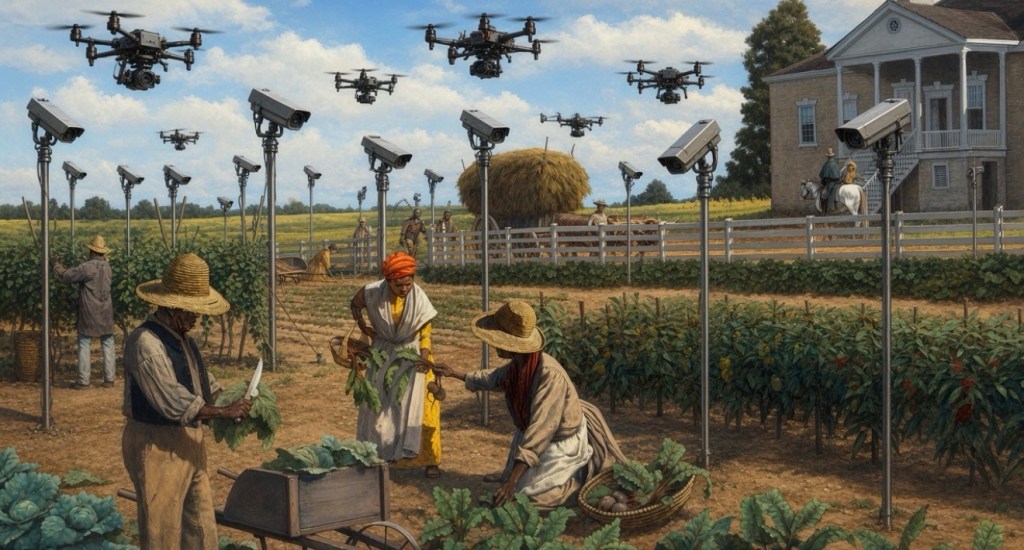
That is an extraordinary amount of surveillance infrastructure.
But Flock is not the entire problem.
Flock is a symptom of a much larger trend: the privatization of surveillance.
We are building a society in which surveillance is increasingly treated as a service that private companies can provide to governments, businesses, homeowners associations and other institutions.
That should concern everyone, regardless of political ideology.
Because once surveillance becomes infrastructure, it becomes much harder to escape.
You don’t have to commit a crime to participate in this system. You don’t have to consent to being tracked. You simply have to drive down a public road.
Your car passes a camera.
Your license plate is captured.
Your location becomes information.
And that information can become part of a system that other people can search, analyze and use.
This is where we need to stop talking about surveillance technology as though it exists in some politically neutral vacuum.
It doesn’t.
Surveillance infrastructure is infrastructure of power.
And when that infrastructure is owned and operated by private companies, we have to ask a basic question:
Who owns the information generated by ordinary people’s lives?
The New Colonialism Is Digital

Pope Leo XIV makes an extraordinarily relevant argument in his 2026 encyclical Magnifica Humanitas.
He writes:
“Even today, colonialism assumes new forms. It no longer dominates only bodies, but appropriates data, transforming personal lives into exploitable information.”
The Pope is not writing specifically about Flock cameras. His argument is broader: data itself can become a resource that powerful institutions extract from people and communities.
He describes data, algorithms, digital platforms and technological infrastructure as new forms of property whose concentration among a small number of powerful actors can create new inequalities. He also warns about communities exposed to invasive surveillance and the danger of technology reducing human beings to data, commodities or components of a machine.
That is precisely the conversation America needs to have about privatized surveillance.
And yes, I am going to use a provocative word:
Plantation.
I call this potential system a digital plantation.
Not because a surveillance camera is literally equivalent to a historical plantation. It isn’t. The comparison is about extraction and power: ordinary people generate something valuable through their everyday existence, while powerful entities control the infrastructure through which that value is collected and used.
We go to work.
We go shopping.
We visit friends.
We take our children to school.
We drive across town.
We attend religious services, protests, political meetings, medical appointments or simply go somewhere nobody else needs to know we’re going.
And increasingly, there can be a digital record of those movements.
The question isn’t simply whether police can use that information to solve crimes.
Of course legitimate law enforcement needs legitimate tools to investigate serious crimes.
The question is:
What kind of society are we creating when privately operated surveillance infrastructure becomes embedded in ordinary public life?
Surveillance Should Not Be a Private Industry
There is a fundamental difference between using surveillance in a narrowly defined investigation and creating enormous databases capable of reconstructing people’s movements.
One is targeted law enforcement.
The other can become an architecture of social observation.
And once that architecture exists, future governments, future police departments and future corporations inherit it.
That is why I don’t think surveillance infrastructure should be treated like an ordinary commercial product.
My position is straightforward: surveillance infrastructure should be a public, nonprofit service.
If society decides that certain surveillance infrastructure is necessary for public safety, then that infrastructure should belong to the public—not to a corporation whose financial incentive is to expand surveillance.
And the public service responsible for operating that infrastructure should be institutionally separate from law enforcement.
Police should not have direct, unrestricted access to public surveillance infrastructure.
Access should require independent oversight, clear legal standards and a specific justification—not simply the fact that someone in law enforcement wants to look.
Imagine a different model.
The public owns the infrastructure.
An independent public service operates it.
Law enforcement requests access when it has a legitimate legal basis.
An independent authority determines whether that request meets the required standard.
And there is a permanent record of who accessed what information and why.
That is fundamentally different from allowing a private surveillance company to build a massive commercial network and then giving law enforcement direct access to it.
Surveillance is simply too powerful to become another private industry.
If governments believe surveillance infrastructure is necessary, they should be willing to build it under democratic rules and subject it to democratic accountability.
The answer to the dangers of private surveillance should not be more private surveillance.
It should be public ownership, nonprofit operation, independent oversight and strict limits on access.
Privacy Is Not a Partisan Issue

The resistance to expanding surveillance isn’t necessarily a left-versus-right argument.
The New York Times reported opposition to Flock cameras among both liberals and conservatives in Texas, illustrating how concerns about surveillance can cross traditional political boundaries.
That should tell us something.
Privacy is not a left-wing issue. It is not a right-wing issue. It is a human issue.
Neither should we accept the idea that private companies automatically deserve the right to build permanent surveillance infrastructure simply because governments are willing to pay for it.
Public safety matters.
But so does public sovereignty.
If a city installs surveillance infrastructure on public roads, residents deserve to know exactly what information is being collected, who owns it, how long it is retained, who can access it and what legal protections exist against abuse.
There should be transparency.
There should be meaningful democratic oversight.
There should be strict limits on retention and access.
And there should be consequences when surveillance systems are abused.
Most importantly, we should reject the idea that technological capability automatically creates moral permission.
Just because we can track people does not mean we should.
Just because a company can monetize information does not mean that information belongs to the company.
And just because surveillance can make policing more convenient does not mean convenience should override civil liberties.
Pope Leo’s warning ultimately comes back to human dignity. Magnifica Humanitas argues that technological systems must serve people and the common good rather than allowing technology, efficiency or profit to become the ultimate measure of human value.
That is the real danger.
The problem isn’t one camera.
It isn’t even one company.
The problem is the privatization of the machinery of observation.
Once that machinery becomes normal, profitable and deeply embedded in everyday life, dismantling it becomes much harder.
So before we build an America where every movement can become another data point in somebody else’s database, we should stop and ask a very simple question:
Who owns the information generated by our lives?
My answer is that the public should own the infrastructure, an independent public institution should operate it, and law enforcement should have to follow the law to access it.
Because if the answer is always “whoever owns the technology,” then we aren’t merely buying security.
We are surrendering power.
And I don’t think freedom should come with a subscription fee.
By Jonathan Marquez


Leave a Reply