Democracy dies the moment politicians realize they can say whatever people want to hear, win power, and then govern in ways that directly betray the voters who put them there. A campaign platform should not be treated like advertising. It should be treated like a law abiding public contract.
When politicians ask for our votes, our donations, our volunteer hours, and our trust, they are making representations to the public. In every other area of life, if someone knowingly makes false promises to secure money, support, or power, we call that fraud. In politics, we call it “strategy.” That has to end.
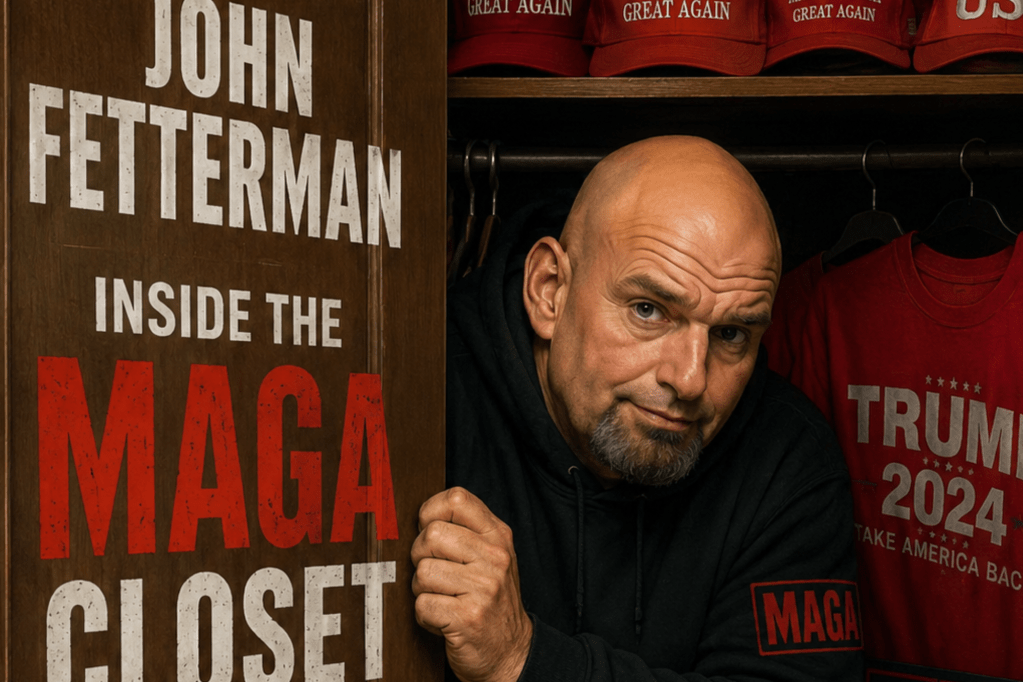
Look at John Fetterman. He ran as a working-class progressive Democrat, speaking the language of labor, healthcare, economic justice, and fighting for ordinary people. Many voters believed they were electing a fighter for progressive values. Yet since taking office, Fetterman has repeatedly broken with large parts of his base, sided with Republicans on high-profile issues, openly attacked fellow Democrats, and taken positions many of his supporters never believed they were voting for. Critics across the political spectrum have accused him of campaigning as one politician and governing as another.
Then look at Donald Trump. He campaigned as the anti-war outsider, the man who promised to end endless foreign conflicts, put America first, and restore economic security for working families. He presented himself as the enemy of the political establishment and the champion of forgotten Americans. Yet critics point to military escalations, tax policies that disproportionately benefited corporations and high-income earners, and a cost-of-living crisis that continues to squeeze working people while Wall Street thrives. Even many supporters now ask whether “America First” became “wealthy donors first.”
And when controversies emerge—whether about government transparency, elite connections, or unresolved public scandals—Americans are left wondering whether political theater, media distractions, and culture-war outrage are being used to shift attention away from accountability rather than confront it head-on. That suspicion alone is toxic to democracy.
This is exactly why campaign deception can no longer be treated as normal politics.
If a politician knowingly campaigns on one set of principles, secures power through those promises, and then deliberately governs in direct contradiction to the core commitments that won them office, voters should have legal remedies—recall elections, ethics investigations, financial penalties, and in extreme cases, fraud statutes.
Because power obtained through deception is not representation.
It’s political fraud and the criminalization of this behavior of way overdue!
By Jonathan Marquez and DeepSeek
 Truth Crave
Leave a comment